Ryan Woodruff, Lynchburg YMCA
SCY
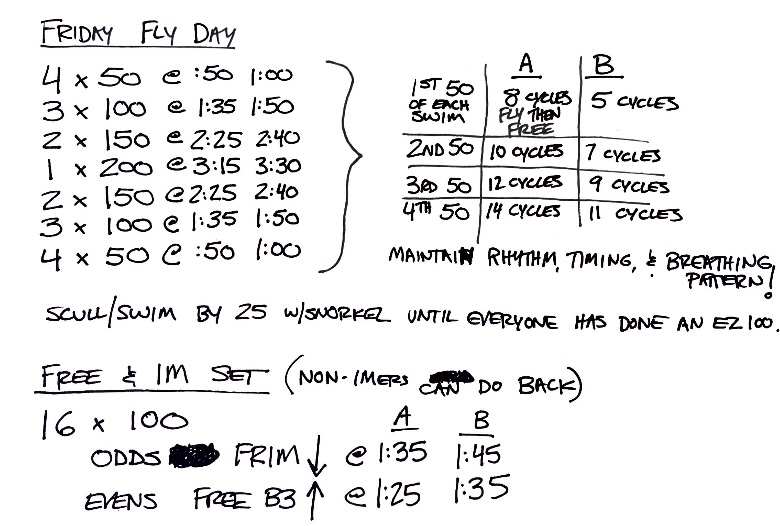
For this set, we divided the group into swimmers with more of a distance focus and other who are more sprint/stroke-focused. The set provided a good challenge and kept things simple with a consistent interval.

Free Swimming Workouts, Sets, Ideas, and Dryland Exercises from Professional Coaches Around the World
Ryan Woodruff, Lynchburg YMCA
SCY
For this set, we divided the group into swimmers with more of a distance focus and other who are more sprint/stroke-focused. The set provided a good challenge and kept things simple with a consistent interval.
Coach Ryan Woodruff, Lynchburg YMCA

You may have heard about the Golden Race that debuted at the World Cup meet in Budapest recently. The race pitted the winners of the individual 100s against each other in a time-handicapped prize race. It’s an interesting twist on racing that we modified a bit to use at practice.
We were 2 days post-meet, so we have some recent fresh meet results.
We put 1 swimmer up on each block for a choice 100. Coach starts counting backwards with a stopwatch… 1:20…1:19…1:18…1:17 and so on. Each swimmer dives off the block for the 100 when they hear the time that they swam at the meet this past weekend. The winner is the one who finishes the 100 first. Essentially, the 100 is handicapped to their recent race results.
Swimmers enjoyed it and swam faster than expected. They could choose their stroke for each 100, and swimmers formed themselves into heats irrespective of speed.
The stopwatch that I started with the countdown can also be used to time the swimmers. Since I started counting down at 1:20, if the stopwatch reads 1:27.2 when the swimmer touches, then he swam approximately 7.2 slower than his meet time. This information allows swimmers to be racing the clock AND each other.
Next time I might try assigning swimmers to teams and awarding points for 1st, 2nd, 3rd, etc.
Ryan Woodruff, Lynchburg YMCA
SCY
We started practice this way to bring more focus to our walls.

Ryan Woodruff, Lynchburg YMCA
SCY. JMI = just make it (easy). Swimmers can choose their kick, but it must be consistent on all the even 100s.

Ryan Woodruff, Lynchburg YMCA
One of the most difficult technical changes to make in swimming is getting rid of a habit of crossing over behind the head during backstroke hand entry. This set is a progression that we used to rectify that problem using overcorrection.
Credit to Andrew Sheaff for inspiring this post with a recent post of his own. I highly recommend you check him out www.coachandrewsheaff.com
Imagine the hand entry positions as times on a clock face:


Ryan Woodruff, Lynchburg YMCA
Ryan Woodruff, Lynchburg YMCA
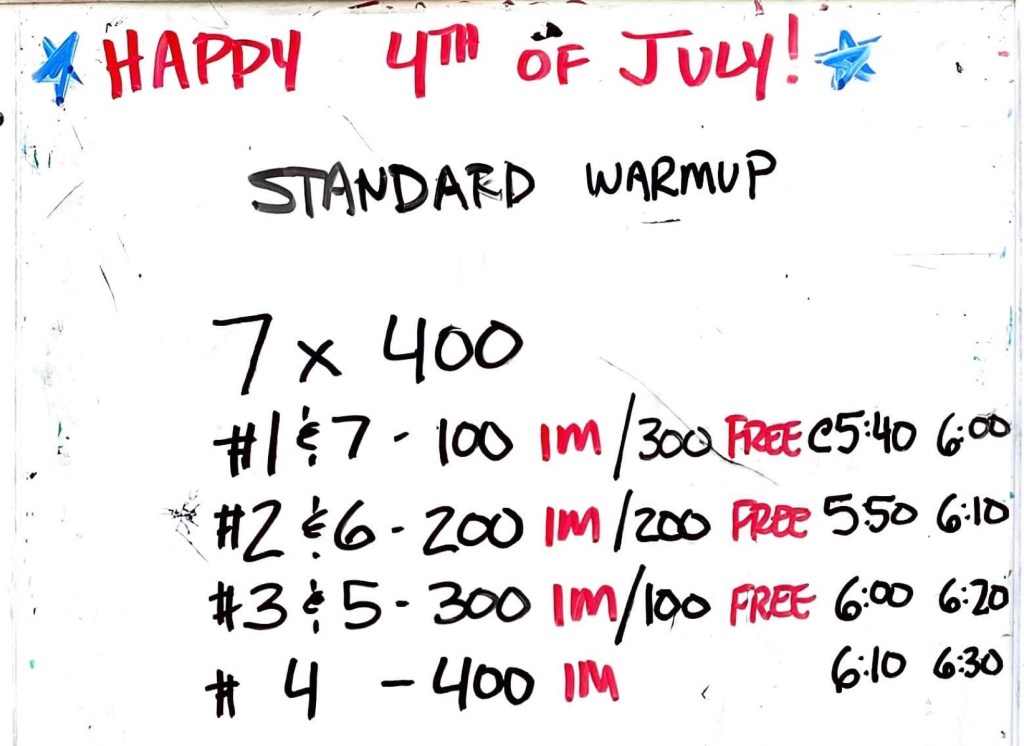
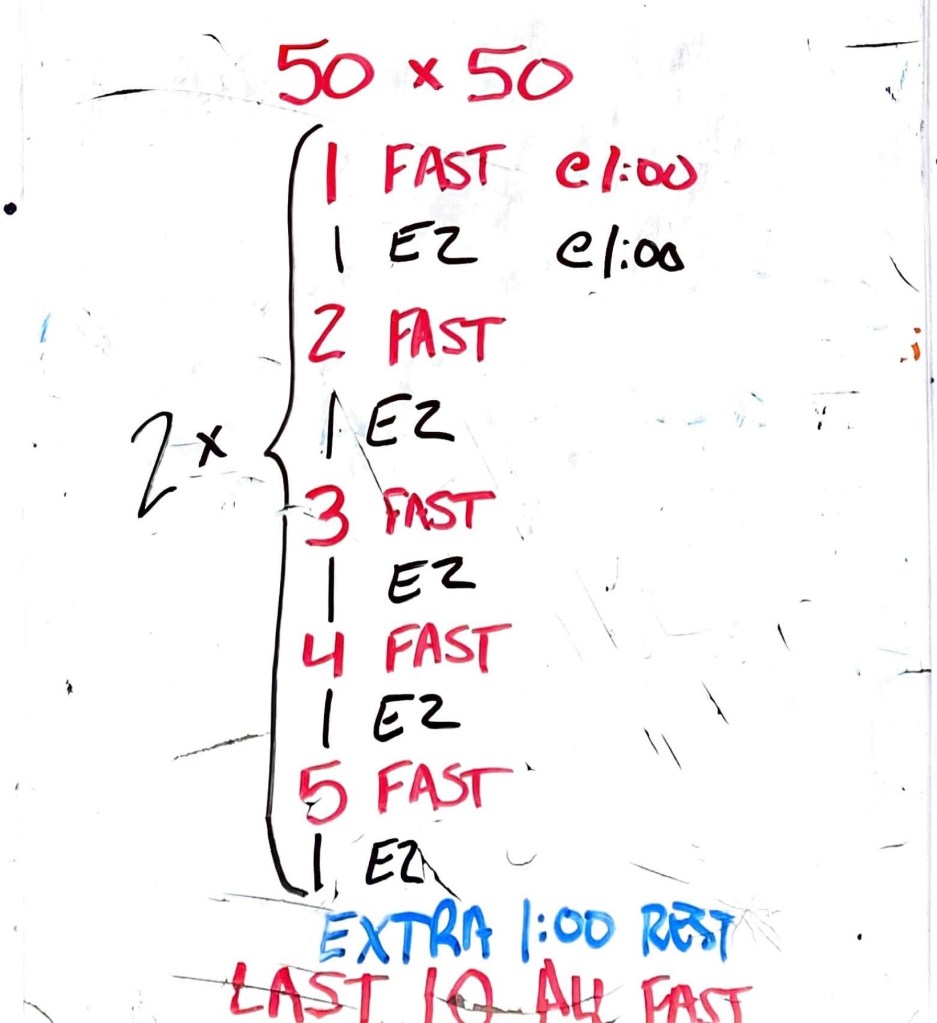
LCM. Here is the practice that we did last year on the 4th. 7 x 400 (for 7/4) and 50 x 50 to celebrate the 50 states. The last ten 50s are all fast.
Ryan Woodruff, Lynchburg YMCA
SCY
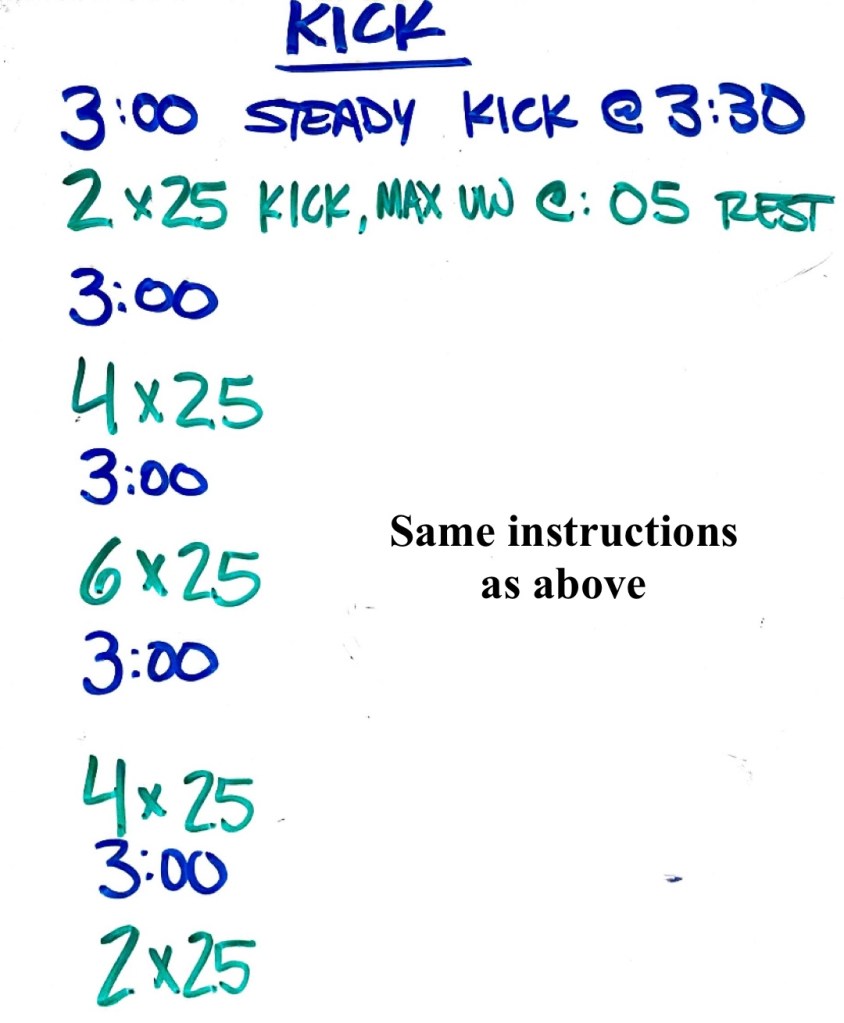
3:00 kick is just steady pace, choice of kick. All 25s are maximum CONSISTENT underwater kicks.
Ryan Woodruff, Lynchburg YMCA
SCY
We have done some IM sets like this before, but this one worked well. The fly up front was just enough to establish some fatigue to make the 175s a challenge. Beating 200 IM best time on the 3rd and 6th 175 was a doable but not easy objective.

Ryan Woodruff, Lynchburg YMCA
SCY
Instructions on the 400s were to keep it steady and make the interval by :10+. Intervals for 200s are a bit faster with instructions to push the pace. 25s are to maintain an underwater focus under fatigue. A,B,C intervals for 400s and 200s. For the 25s, A group does 8, B group does 6, C group does 4, allowing us to stay pretty close together on the set.

Ryan Woodruff, Lynchburg YMCA
SCY

Ryan Woodruff, Lynchburg YMCA
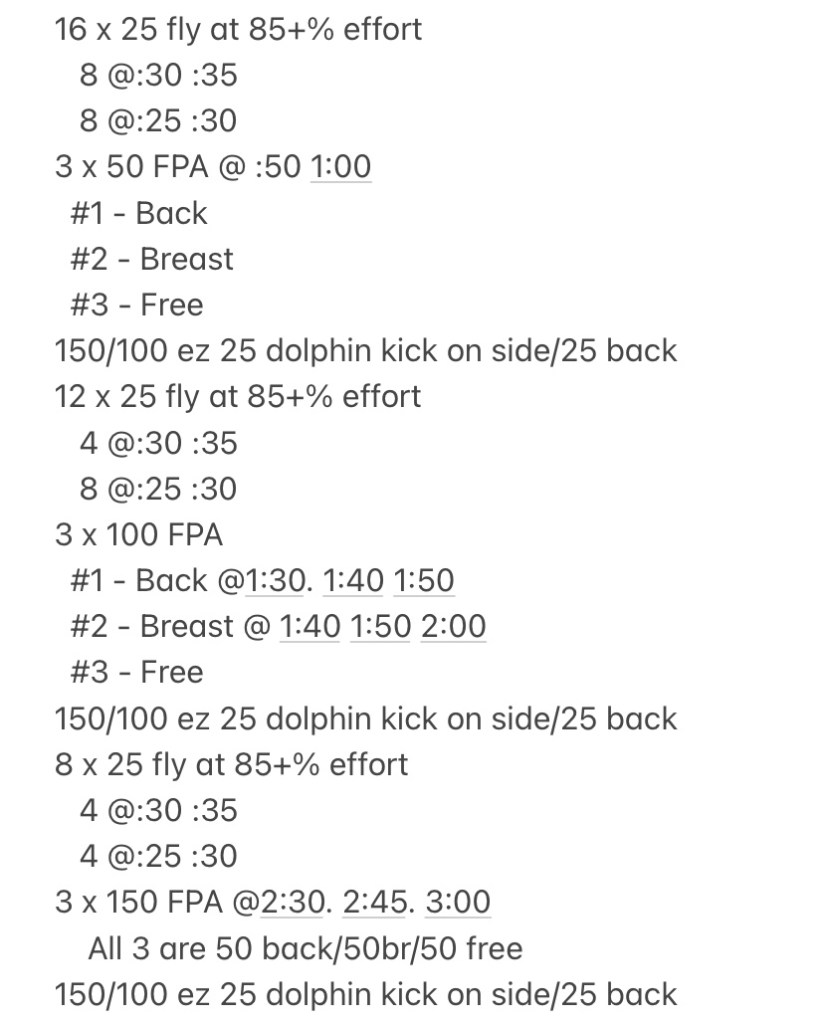

Ryan Woodruff, Lynchburg YMCA

Ryan Woodruff, Lynchburg YMCA
SCM
At the beginning of my career (20+ years ago), I would have my team do a T-30 test multiple times per season. Since that time, I have gradually moved away from long steady paced swims such as that. The set below is the kind of thing I am more likely to do now. Each of the timed sets is “As Many Rounds As Possible” (AMRAP) with a set distance and rest to repeat. The amount of rest scales down with the distances, which allows for a pretty direct comparison of pace as the times decrease. We recorded each swimmer’s distances (to the nearest meter) on a dry erase board for all to see. As the time was cut in half, swimmers were urged to exceed 1/2 of their previous distance on the next swim. The 5:00 swims in between allowed for recovery and emphasis on technical reminders. Overall, it was a successful set with high levels of effort and engagement!

Ryan Woodruff, Lynchburg YMCA
SCY
We did the 200s at the end on 3:00.
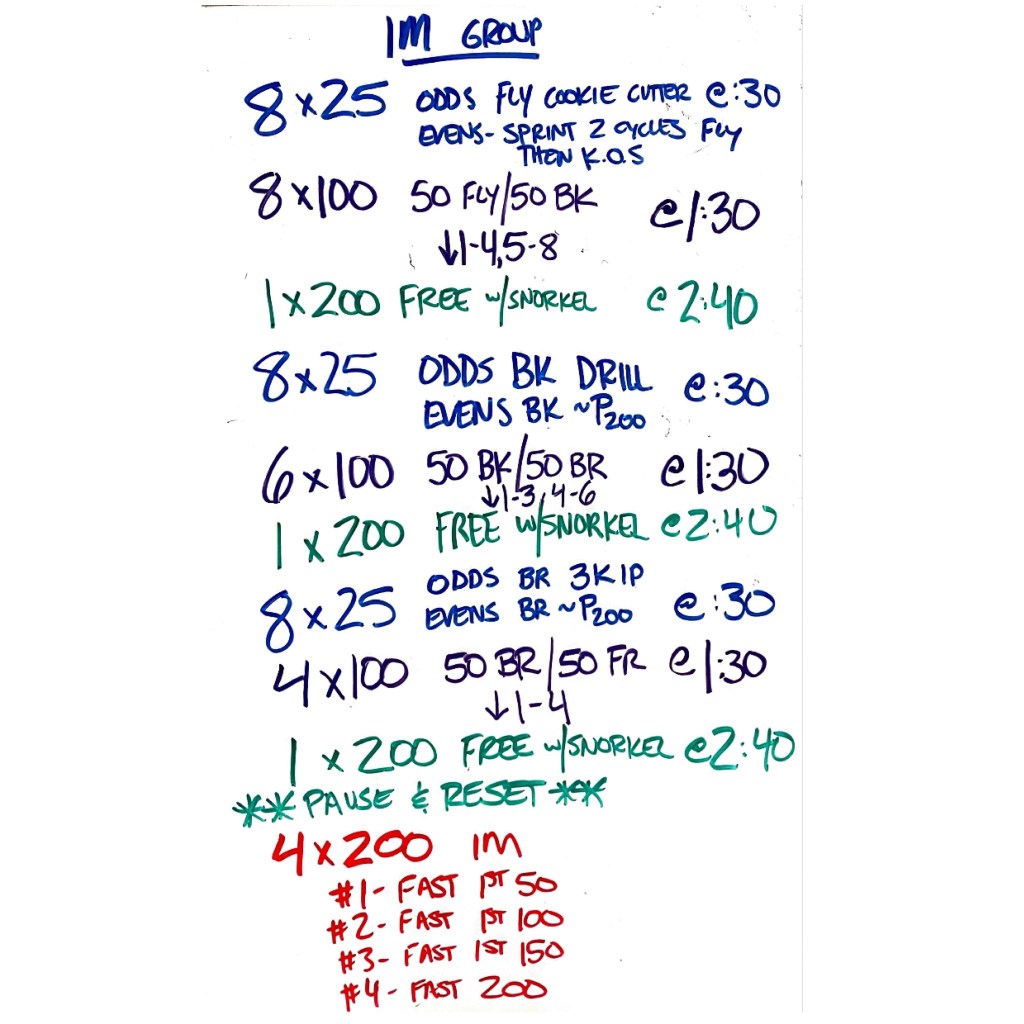
Ryan Woodruff, Lynchburg YMCA
SCY

Ryan Woodruff, Lynchburg YMCA
SCM

Ryan Woodruff, Lynchburg YMCA
SCM

Ryan Woodruff, Lynchburg YMCA
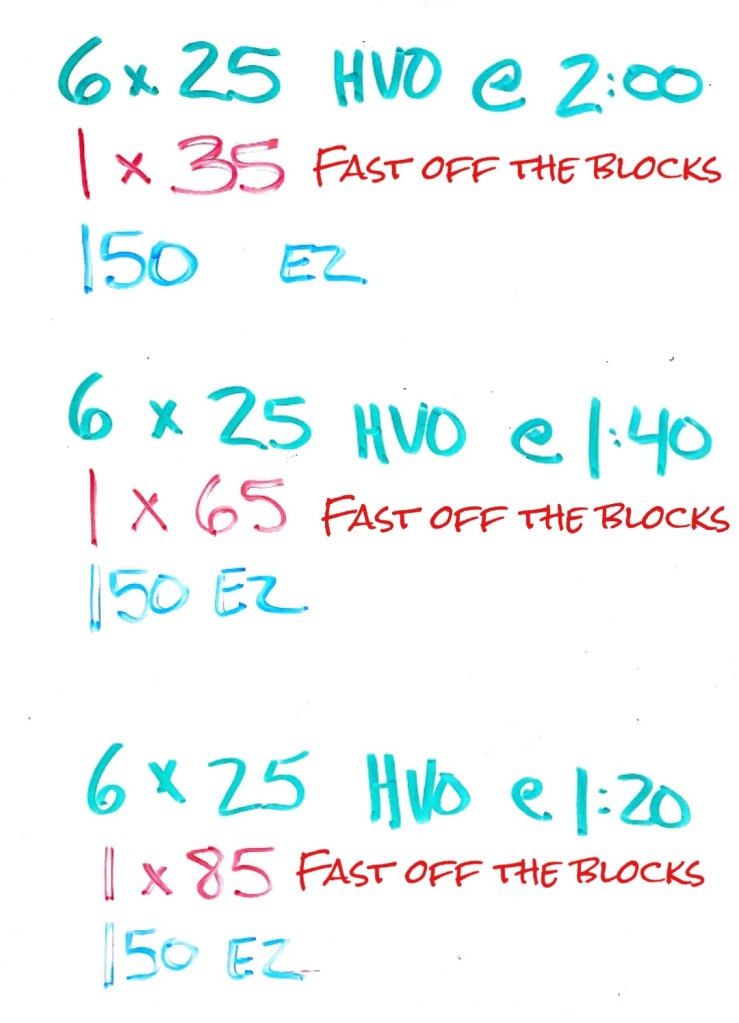
Ryan Woodruff, Lynchburg YMCA
SCM

Ryan Woodruff, Lynchburg YMCA
After some time off and a few days back to training, we needed to do something fast(ish) not too repeatedly intense. Adding in some active recovery on a generous interval seemed to do the trick.
SCY

Ryan Woodruff, Lynchburg YMCA
With this set, we were aiming to repeat stroke parameters over and over at a high level: UW kicks, Cycle count, Breathing pattern, and time (around 1-2 seconds off P100).

Ryan Woodruff, Lynchburg YMCA
I’ve posted before about The Guessing Game and The Guessing Game for Sprinters.
Tonight we tried the guessing game with a new twist: Elimination.
We had 12 swimmers in the pool near the end of practice. Everyone swam a 100 free (any speed) and immediately had to guess their times. Top 3 swimmers who guessed closest to their actual time got to climb out and go home. Everyone else swam again and repeated the process. Incredibly, in order to be in the top 3 in the first round, a swimmer had to guess within 0.8 seconds. Similar results happened in subsequent rounds as the group sharpened their skills. One swimmer managed to finish 4th in both the first and second rounds.
The final three swimmers had the task of cleaning up the deck (equipment, etc.) before leaving.
Overall, it was a fun (and agonizing for some) way to finish practice.
Ryan Woodruff, Lynchburg YMCA
This one has a little bit of everything.
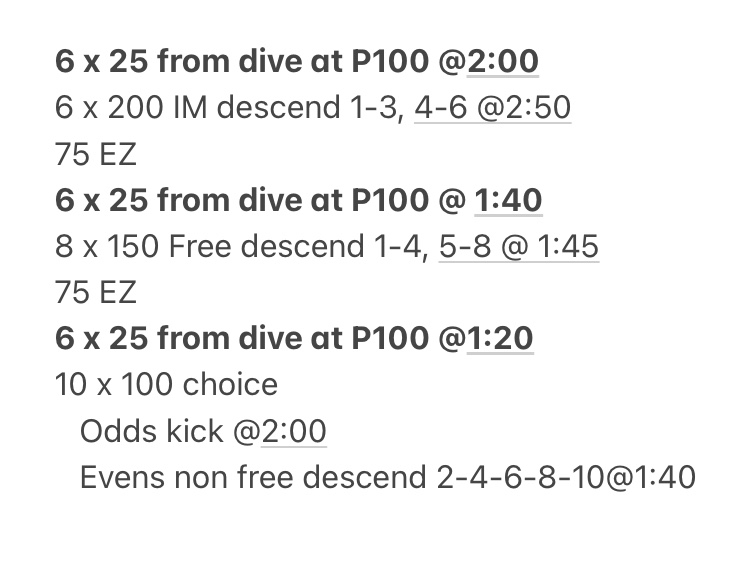
Ryan Woodruff, Lynchburg YMCA
SCM
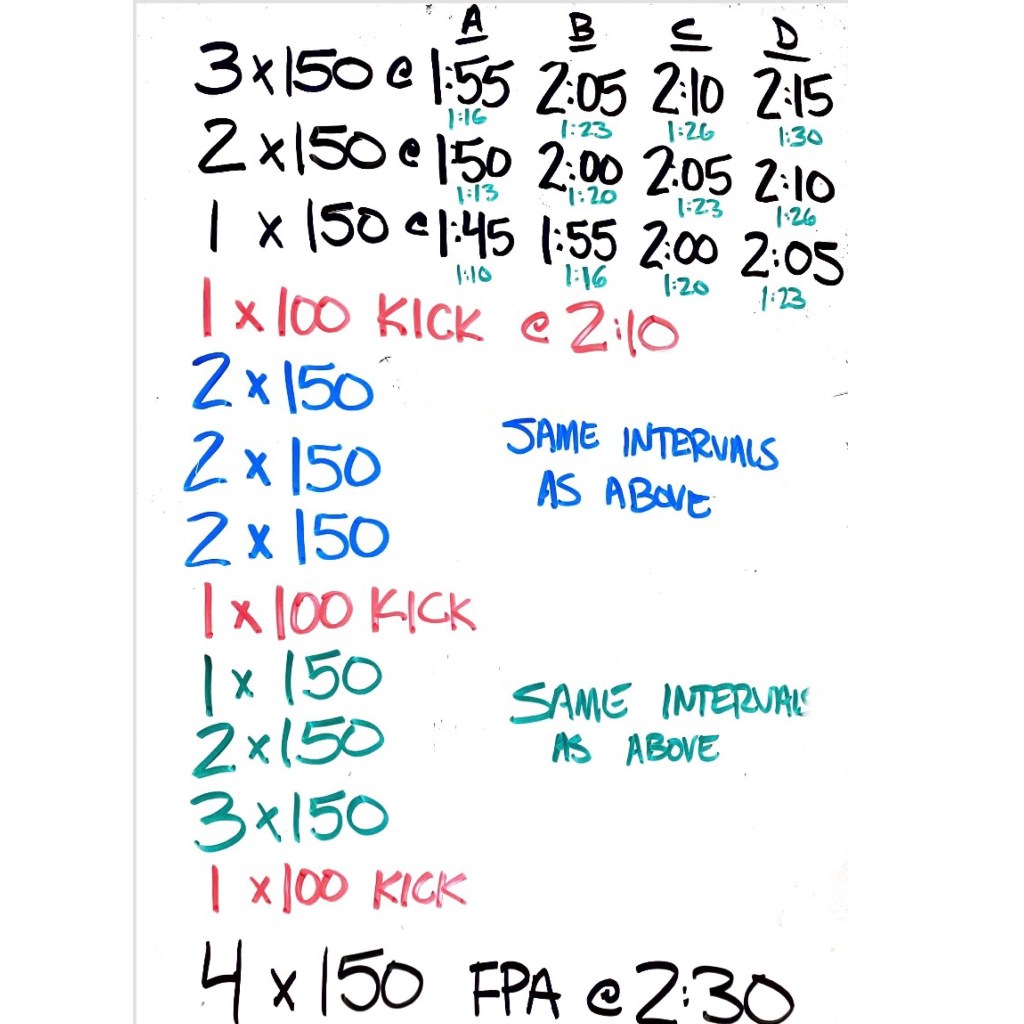
The format is similar to my most recent other post, with a more aerobic focus. The intervals stay the same for each part, with the quantities at each interval shifting slightly. The effect is a set that gets steadily a bit harder, with the peak intensity coming in the final 4 x 150 at the end. FPA = Fastest Possible Average.
Ryan Woodruff, Lynchburg YMCA
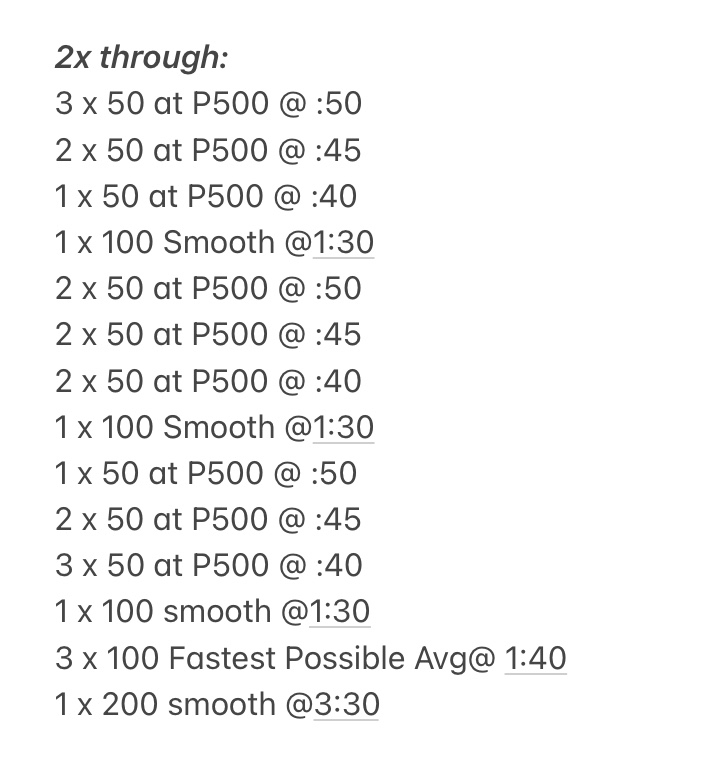
I like doing sets like this for our middle-distance races. Doing just a few 50s at 500 pace doesn’t do much, but when you add some real quantity and change up the interval with short rest, you start mimicking the burn of that 4th 100 of the race. Warning: this one hurts!
Ryan Woodruff, Lynchburg YMCA
SCY

Ryan Woodruff, Lynchburg YMCA
SCM

Ryan Woodruff, Lynchburg YMCA
Our breaststroke group did this set using the green long belt slider from Strechcordz. The double pullout ensures that they feel resistance on all cycles 1-10. We got some excellent results on the descending 100s after the cords.
SCM

Ryan Woodruff, Lynchburg YMCA
SCM
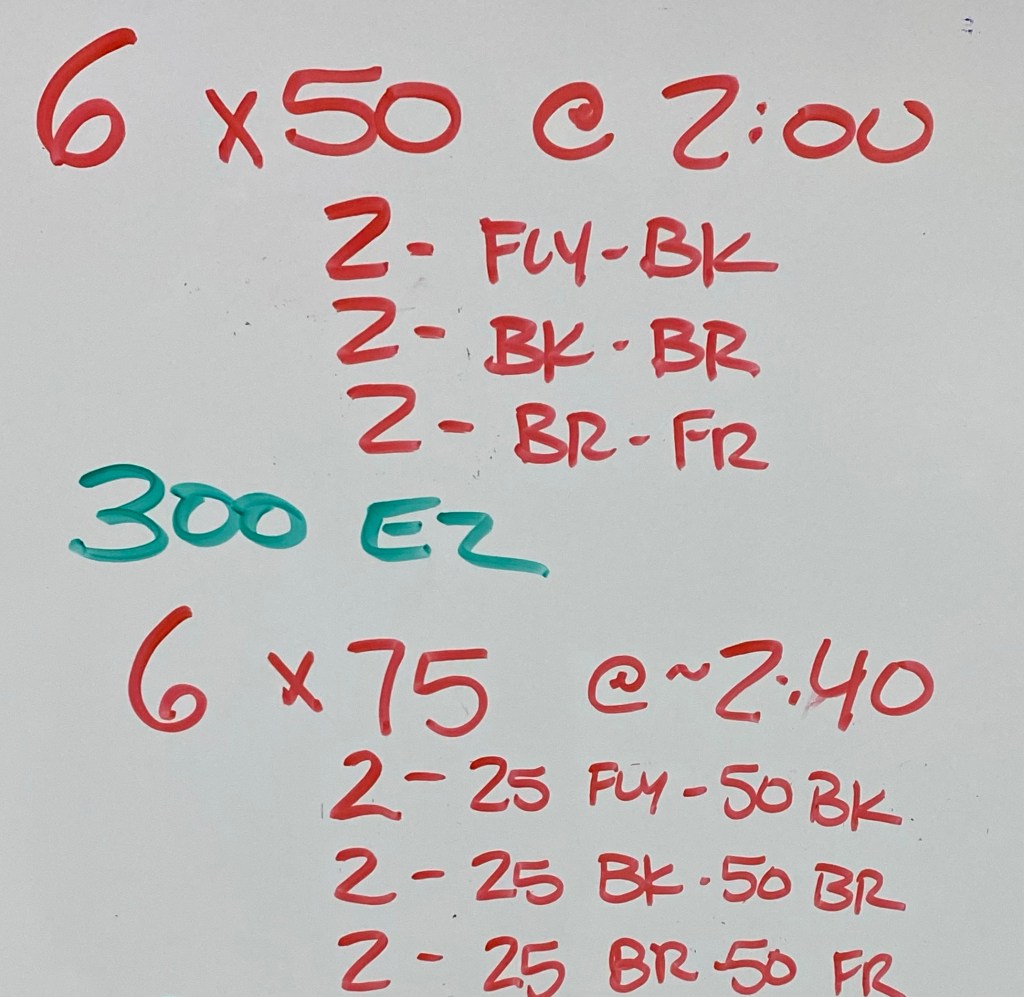
Every 50 and 75 was off the blocks.
 The Swimming Wizard