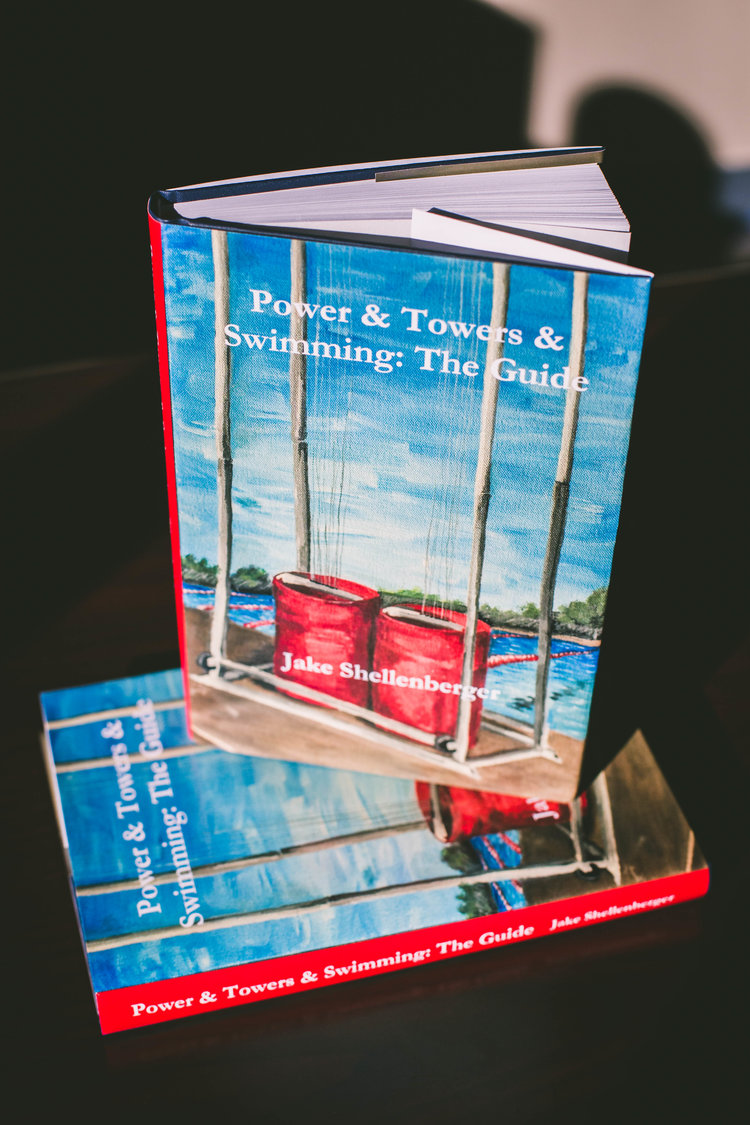
BOOK REVIEW: "Power & Towers & Swimming: The Guide" by Jake Shellenberger, Head Coach at Liberty University

Ryan Woodruff
Head Coach
Lynchburg YMCA

This past summer I had the opportunity to share the pool deck with Jake Shellenberger, Head Swim Coach at Liberty University as his squad and mine both rented time at our local outdoor 50m pool.  I would occasionally pick his brain on training, and we had many interesting discussions on a variety of topics, so you can imagine my eagerness when he told me he was putting together a book.

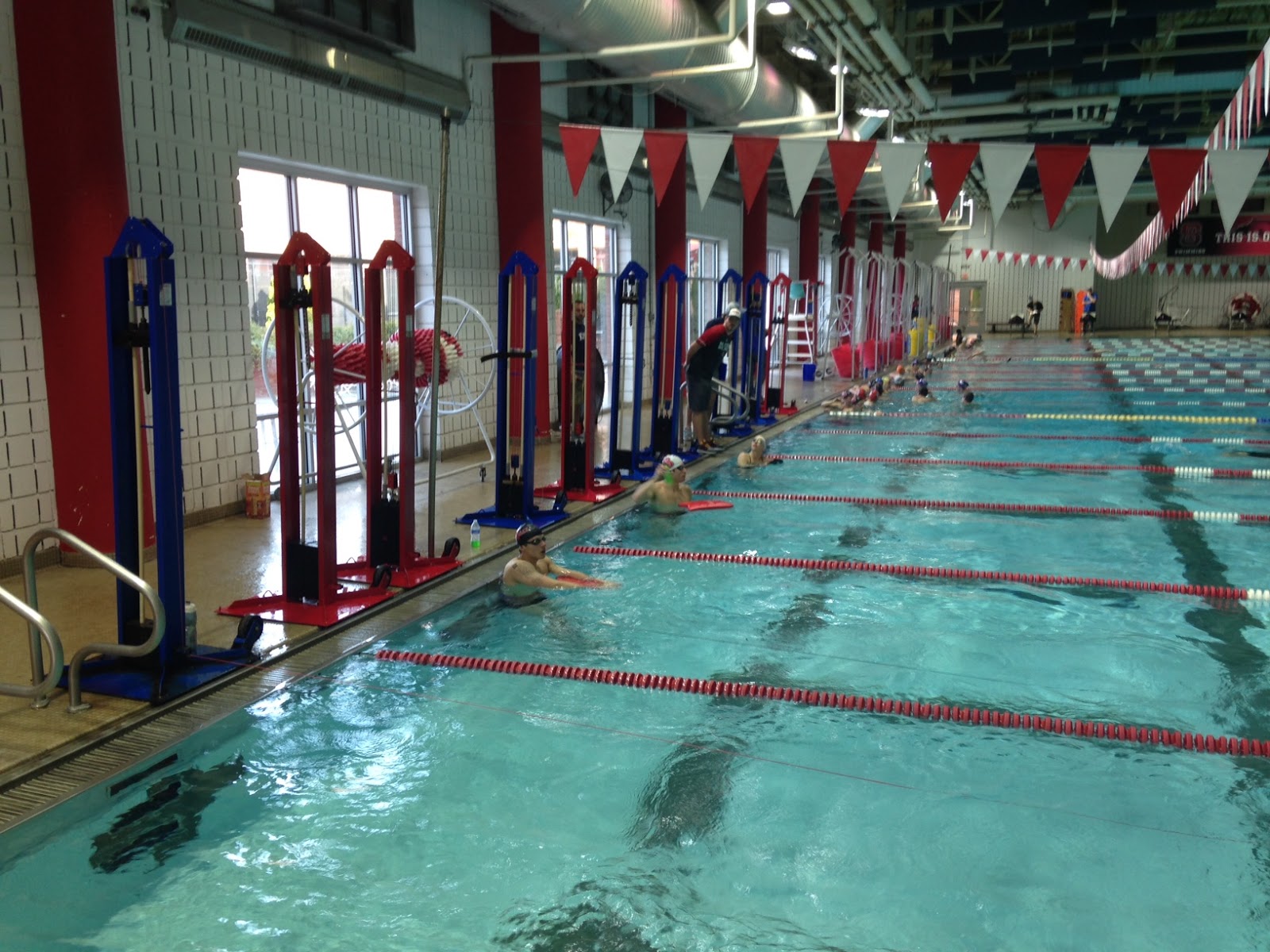
His recently completed “Power & Towers & Swimming: The Guide” is a rich, detailed book on how to use some of what he deems the most valuable “toys” a swim coach has: Power Towers and Power Racks.  Shellenberger explains his power-based training philosophy that crystallized during his time as sprint coach at Penn State and during a particularly formative summer as an understudy at Frank Busch and Rick DeMont’s 2007 Arizona squad that would go on to win double NCAA Championships the following spring.  Shellenberger has brought that learning to bear since 2009 at Liberty with much success, and distills it very transparently and extensively in this book.

His very organized thought process is reflected in the 11-chapter construction of the book.  He leaves no stone unturned in outlining how to make make Power a part of the training for EVERY swimmer on your squad, regardless of distance or stroke orientation.  At Liberty, Shellenberger and his Assistant Coach Jessica Barnes have every swimmer train on the Towers multiple times per week, and the book provides many real-world examples of how it has helped his swimmers improve.  They don’t just do short 25 yard blasts with the Towers, but plenty of drilling, kicking, and other power-based training, each of which has its own devoted chapter.  The book doesn’t just explain what they do, it gives exact sets that you can use directly or adapt for your team.

As a club coach with a background developing swimmers with a hearty dose of training, I expected “Power & Towers & Swimming” to be in the vein of much of the recent USRPT dogma.  I was pleased to find Shellenberger’s treatise much more nuanced than I anticipated.  His examples and distilled wisdom were extremely valuable and thought provoking, and have made a significant impact on my thought processes about how I train my swimmers.

Regardless of training philosophy, this book will have coaches pondering new ways to help swimmers get better, and is a MUST for every smart swim coach’s library.


Buy “Power & Towers & Swimming: The Guide” here.

Read Coach Shellenberger’s blog here.

Follow Coach Shellenberger on Twitter and Instagram

Follow Liberty Swimming and Diving here

Fly Set for Age Groupers – the "No Butter-Struggle Set"

Ryan Woodruff
Head Coach
Lynchburg YMCA

One difficult aspect of having young age group swimmers train butterfly is that their technique often deteriorates from beginning to end of a 25.  It becomes what I heard one coach call “butter-struggle” instead of butterfly, a situation that is a recipe for bad habits to form.  Below is a set that could be repeated over the course of a season to help swimmers maintain their technique while they gradually increase their fitness and the amount of fly they swim.

6 x 100 @ Interval that gives approximately 20-30 seconds rest
   On #1 and #2 – the first 3 cycles off the wall are fly, then go easy free the rest of the length
   On #3 and #4 – the first 4 cycles off the wall are fly, then go easy free
   On #5 and #6 – the first 5 cycles off the wall are fly, then go easy free

1 x 50 fast fly from dive (to measure progress from one repetition of the set to the next)

A week or two later, the set could be adjusted to 4, 5, and 6 cycles.  A week or two after that, the set could be adjusted to 5, 6, and 7 cycles, and so on.  The interval could also be adjusted harder or easier, depending on how they seem to be adapting.

For even better results – include a required number of dolphin kicks off the wall (though I suggest you keep this constant so as not to give them too many numbers to keep in their head.

Another option — have the remainder of the 25 after the fly strokes be dolphin kick on the back instead of easy free to prevent sloppy freestyle from happening.

Dryland Descend Fartlek Set

Ryan Woodruff
Head Coach
Lynchburg YMCA

3 x 9:00 continuous @ 10:30
   50 freestyle smooth breathing every 3
   10 squats
   50 freestyle from dive @ ~P200 +2
   5 push-ups
  50 freestyle from dive all out
  3 in & outs (climb out of pool, hop back in)
Do as many rounds as possible in 9:00

2nd 9:00 – swimmers do br or fly
3rd 9:00 – swimmers do backstroke

Resistance Kick Set

Ryan Woodruff
Head Coach
Lynchburg YMCA

This kick set was for a group of very mixed kicking abilities.  The 200/175/150 allowed them to adjust based on their speed.  People doing the 175 did a 150 plus halfway down and back.  The 4 x 25 provided some resistance leg work and they always enjoy pushing each other around.

This one was interesting and went well. Plenty o’ freestyle.

Ryan Woodruff
Head Coach
Lynchburg YMCA

The “rebound kicking” is kicking into the wall and then pushing off of it immediately with the hands, and repeating that process four times.

A photo posted by SwimmingWizard (@swimmingwizard) on Dec 6, 2016 at 5:30pm PST

//platform.instagram.com/en_US/embeds.js

Turn Work

Ryan Woodruff
Head Coach
Lynchburg YMCA

In my opinion, spending time “working on turns” is wasteful when it just involves starting from mid-pool and “doing turns.”  I prefer to do something more like the following set, intended for one of our freestylers who has been having a difficult time with getting the approach to the wall right.

9 x 100 @ 3:00 from dive
#1-3 80% effort (no higher) with maximum focus on approaching/attacking the wall, getting an excellent pushoff and streamline
#4-6  same as 1-3 but at 90% effort (only if #1-3 were completed satisfactorily)
#7-9 100 % effort, same level of excellence expected on turns. If #4-6 were not done well, these last three are still done at 90%

Groovin’ that Pace

Ryan Woodruff
Head Coach
Lynchburg YMCA

I had a lone swimmer do this set in a 25m pool recently on her last day before beginning taper.  The idea was for her to get into a groove with her 500 free race pace and be able to repeat it over and over again.  Seemed to work well as most of the timed 50s were about 0.8-1.0 faster than her “best time” pace and near her goal pace.  While I didn’t want it to feel extremely difficult, she seemed challenged and performed well and fairly consistently.

40 x 50
repeating the following set of ten for 4 rounds
1 at P500 @ 1:00
1 easy free @ :50
2 at P500 @ 1:00
1 easy free @ :50
3 at P500 @ 1:00
2 easy free @ :50

She got a bit of rest on the 500 pace 50s, while the recovery 50s only provided 6-9 seconds of rest on the wall before pushing off on the next one.

Aerobic Back End Set with Coach Andy Figgins of Scotland

Coach Andy Figgins
East Kilbride Swim Team
Scotland

 A bit of return speed/back end speed for form strokers and freestylers. One of my favourite sets. I like the increase in intensity as the aerobic portion gets smaller. This set is done in long course meters by my squad of swimmers 14-17 years old.

Distance     Stroke Group            Freestyle Group 
1,000          Always last 100        750 aerobic free + 250 at 1500 speed
900             at 200 return speed   700 + 200 at 800 speed
800                                               650 + 150 at 400 speed
700                                               600 + 100 at 200 speed
600                                               550 + 50 at 100 speed
500                                               250 + 250 at 1500 speed
400                                               200 + 200 at 800 speed
300                                               150 + 150 at 400 speed
200                                               100 + 100 at 200 speed
100                                               100 at 200 speed

Stroke group interval was 1:30 per 100 from 1,000 down to 600, 1:35 per 100 from 500 down to 100
Freestyle group interval was 1:30 per 100 the whole way

How to swim the 200 free

Ryan Woodruff
Head Coach
Lynchburg YMCA

This was an effort to help some of our swimmers “figure out” the 200 free.  We followed up with a set specifically designed to practice for this event.  That set will come in a later post.

View this post on Instagram

How to swim the 200 free

A post shared by SwimmingWizard (@swimmingwizard) on

Overdistance IM set with Coach Alex Baxter

Alex Baxter

Associate Director of Competitive Aquatics
Wilton Y Wahoos
 

This week I’m working with my top group of 11-12 year old kids on some over distance swims. I have two goals with this; 1- help the kids prepare for longer swims and longer sets in our Junior group without anyone losing count or focus. 2- use the longer swims to help the kids develop a sense of pace. This set from the other night worked well on both accounts.
1×450 progressive IM treadmill (25fly 50free 25fly 25back 50free 25fly 25back 25breast 50free 100 IM 50free). :45R
2×350 150 free 50 kick 150 free (2nd 150 needs to be faster than first 150) :45R
3×250 100 IM 50 back 100 IM (2nd 100 IM faster than 1st 100 IM. Think of a 200 IM where 1st length of each leg is DPS and 2nd length of each leg is fast). :30R
4×125 fins 100 free descend 25 prime fast on 1:55