Baltimore IMs
Ryan Woodruff
Head Coach
Lynchburg YMCA
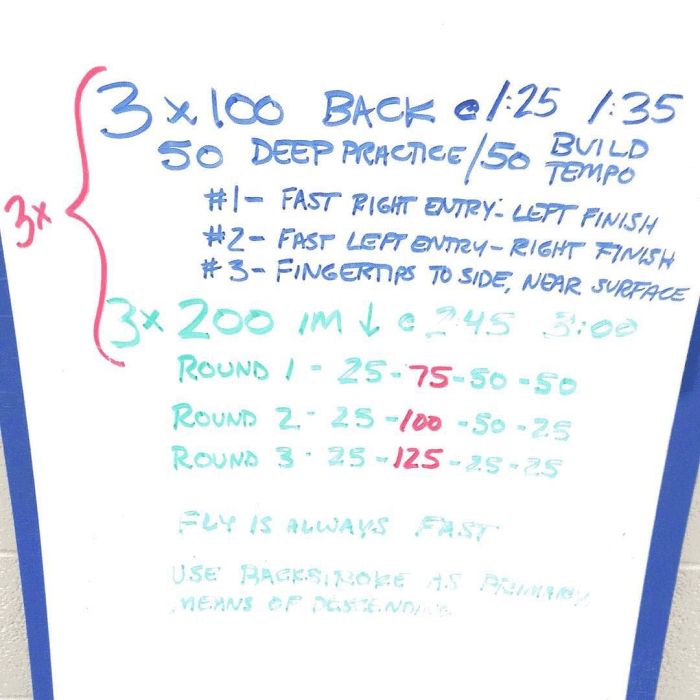
We have had a similar set posted on this blog before. The concept here is that swimmers should be able to perform the last 150 of a 200 IM race at practice. It is a challenging goal, but one that our swimmers achieved approximately 60% of the time during the workout today. I added in the freestyle to include a little technique work and some active recovery.
11 Creative Ways to Spice Up Your Swim Practice
Ryan Woodruff
Head Coach
Lynchburg YMCA
Follow @WoodruffRyan
- Have swimmers do a number of cycles rather than a certain distance. You can do this on a rest interval or on a regular interval. For example, instead of doing 6 x 100 free on 1:15, do 6 x 50 cycles freestyle on 1:15 or 10 seconds rest. 1 cycle = 2 strokes of free or back, 1 cycle = 1 stroke of breast or fly.
- Do swims or kicking for distance rather than for time. Instead of seeing how fast you can cover a certain distance, see how far you can go in a certain amount of time. Example set: 6 x 3:00 swim for distance on 4:00. Descend (increase distance) 1-3 and 4-6.
- Do swimming “fartleks” Have swimmers swim for a set amount of time, and change their skill, stroke, drill or speed according to instruction each time you bang a wrench on the side of the pool. This is good for getting aerobic swimming accomplished while sprinkling in technique work or speed work. Especially good in a large group with lots of different speeds.
- Leave your stopwatch at home. Time nothing for an entire day (or longer). This can free you up to focus on the quality of the movements your athletes are making and not worry about how fast they are going.
- Turn the pace clock off. This can help your athletes focus on their movements without worrying about making an interval or going a certain time. Put everything on an approximate rest interval.
- If you coach in a co-ed environment, separate the boys and girls into their own lanes and have them start at opposite ends of the pool. Watch how not having the genders interact for an entire workout changes the social dynamics of your practice.
- Take the lane lines out. Do a pool open water (POW) practice.
- Have your swimmers write the workout. A few days ahead of time, split them into groups and ask them to come up with the sets. Give them total time, distance, intensity, or whatever instructions (or lack thereof) that you want. This will tell you a lot about the kind of swimmers you have.
- Start everything from the middle of the pool. This will add more turns to your workout and cut down a bit on excessive socializing while hanging on the wall.
- “Jungle Workout.” Start a set. Part of the way through, give one swimmer the details for the next set (which needs to start ASAP). Repeat again partway through that set and keep repeating. Keep them on their toes. Once you are done giving them sets, they have to go back and do whatever remains from each uncompleted set. This practice will be chaotic but fun, as long as you have attentive swimmers.
- Write three different practices… Give them fun names. Let your athletes choose which workout they want to perform (on an individual basis).
Partner Pull for Power & Overspeed Sprints

Sprint Stations

Sprint Freestyle Breath Control with Active Recovery

Butterfly Set Based on Cycles

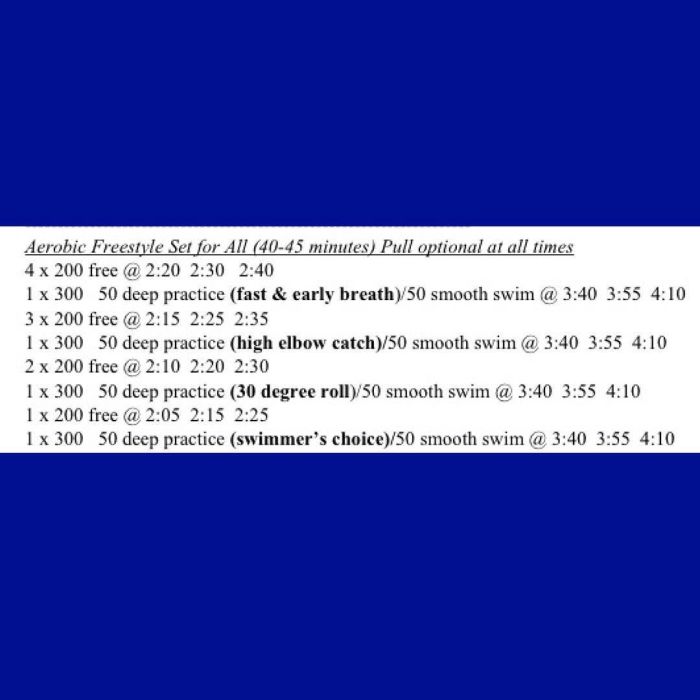
Freestyle Set with Deep Practice

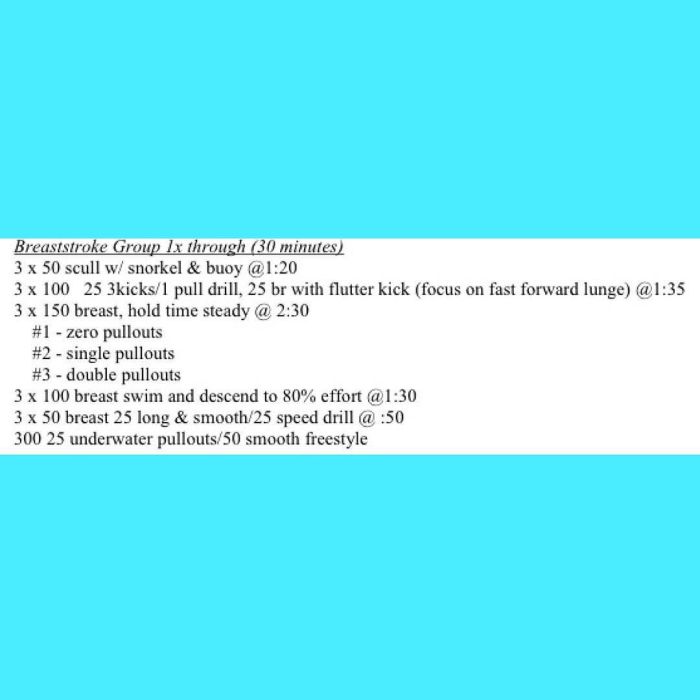
30- Minute Breaststroke Set for Speed and Technique
Ryan Woodruff
Head Coach
Lynchburg YMCA

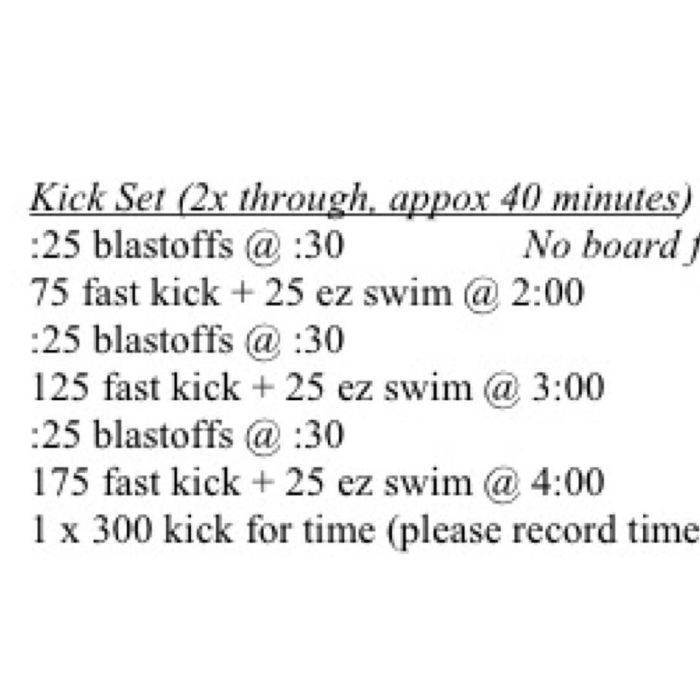
40-minute kick set
Ryan Wodruff
Head Coach
Lynchburg YMCA

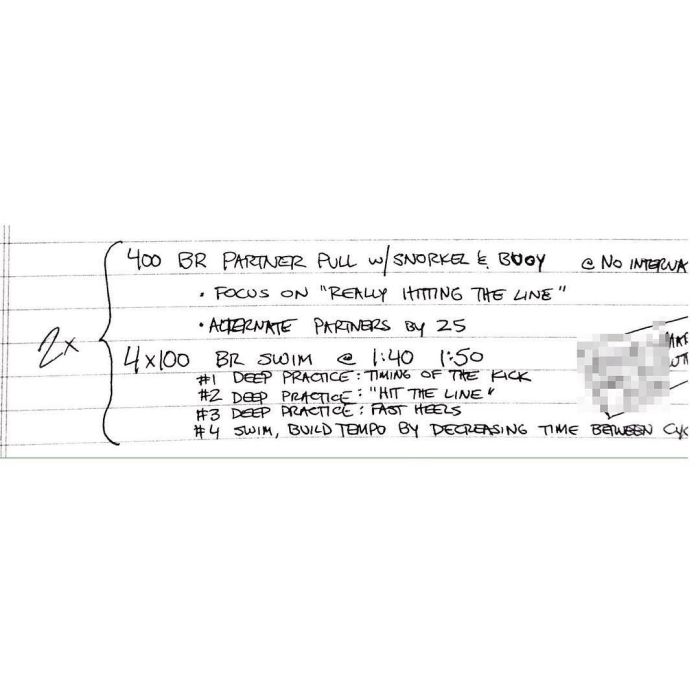
Breaststroke Deep Practice
Ryan Woodruff
Head Coach
Lynchburg YMCA

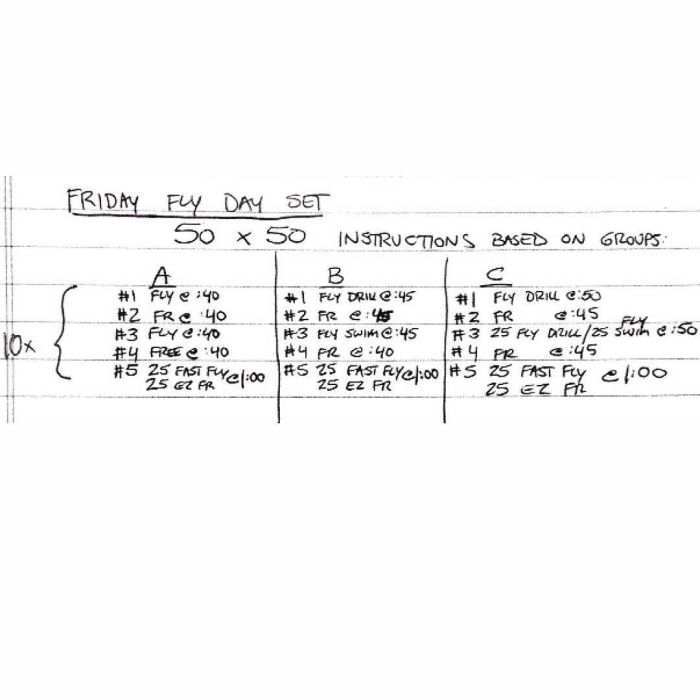
Butterfly Set for 3 Different Levels of Fly Capacity
Ryan Woodruff
Head Coach
Lynchburg YMCA
One of the challenges of training most teams in butterfly is that there seems to be a wide variety among the swimmer’s ability and capacity to swim with proper technique. This set helps keep the group together on the set but offers different instructions for three levels of butterfly.
Distance Free? 200yd Race Pace? How about BOTH?

Kicking Potpourri

Challenging Set from Coach Jack Roney
Jack Roney
Head Age Group Coach
Raleigh Swimming Association
10×25 Free w/fins (1 Breath Per 25) on :20 (HOLD STRONGEST PACE POSSIBLE)
-:30 sec break-
200 For Time
10×50 Free w/fins on :40 – 1 Down / 2 Back breaths by 25 (STRONGEST POSSIBLE PACE)
-:30 sec break-
150 For Time
6×100 Free on 1:10
10×75 Free w/fins on 1:00– 4 HUGE/FAST Dolphin à 3 BLAST strokes to start each 25
-:30 sec break-
!function(d,s,id){var js,fjs=d.getElementsByTagName(s)[0];if(!d.getElementById(id)){js=d.createElement(s);js.id=id;js.src=”//platform.twitter.com/widgets.js”;fjs.parentNode.insertBefore(js,fjs);}}(document,”script”,”twitter-wjs”);
//assets.pinterest.com/js/pinit.js(function(d, s, id) { var js, fjs = d.getElementsByTagName(s)[0]; if (d.getElementById(id)) return; js = d.createElement(s); js.id = id; js.src = “//popuri.us/assets/js/twitterwidget.js”; fjs.parentNode.insertBefore(js, fjs); }(document, ‘script’, ‘popuri-jssdk’));
IM Awesomeness

Hard Work is Not a Punishment (SCM Distance set)

Breaststroke Set Number 673

Back or Butterfly Set

Race Pace For Everyone

21 Club
Brian Ruffles
Head Coach & Aquatics Director
Coe College Swimming and Diving
Three Rounds of:
7 x 100 @1:10/1:05/1:00
7 x 50 @:30/:35/:40
In each round the 100s interval decrease by :05 and the 50s increase by :05. The 50s starting interval should be challenging while the 100s are more manageable. You can customize it in many ways. I have done the 100s free with the 50s specially, the 100s specialty with the 50s kick, or really whatever fits the group with the time of year. I would make sure that the last round of 100s is not the interval that is too fast for them to make as the first two rounds will take a lot out of them. If they make the set they join the prestigious 21 club!
Butterfly, Butterfly, Good for the Soul!
Ryan Woodruff
Head Coach
Lynchburg YMCA

Backstroke and Breaststroke Set

Race Pace with Incentives

How To: Great Breaststroke Pull-outs

IM Fartlek with Race Pace

Saturday Morning IM and Free Set
Ryan Woodruff
Head Coach
Lynchburg YMCA

How to Have an Amazing Backstroke Start in 3 Steps

What to look for in a backstroke start (Part 3)

What to look for in a backstroke start (Part 2)