Elise Knoche, Head Coach, University of Wisconsin-Whitewater
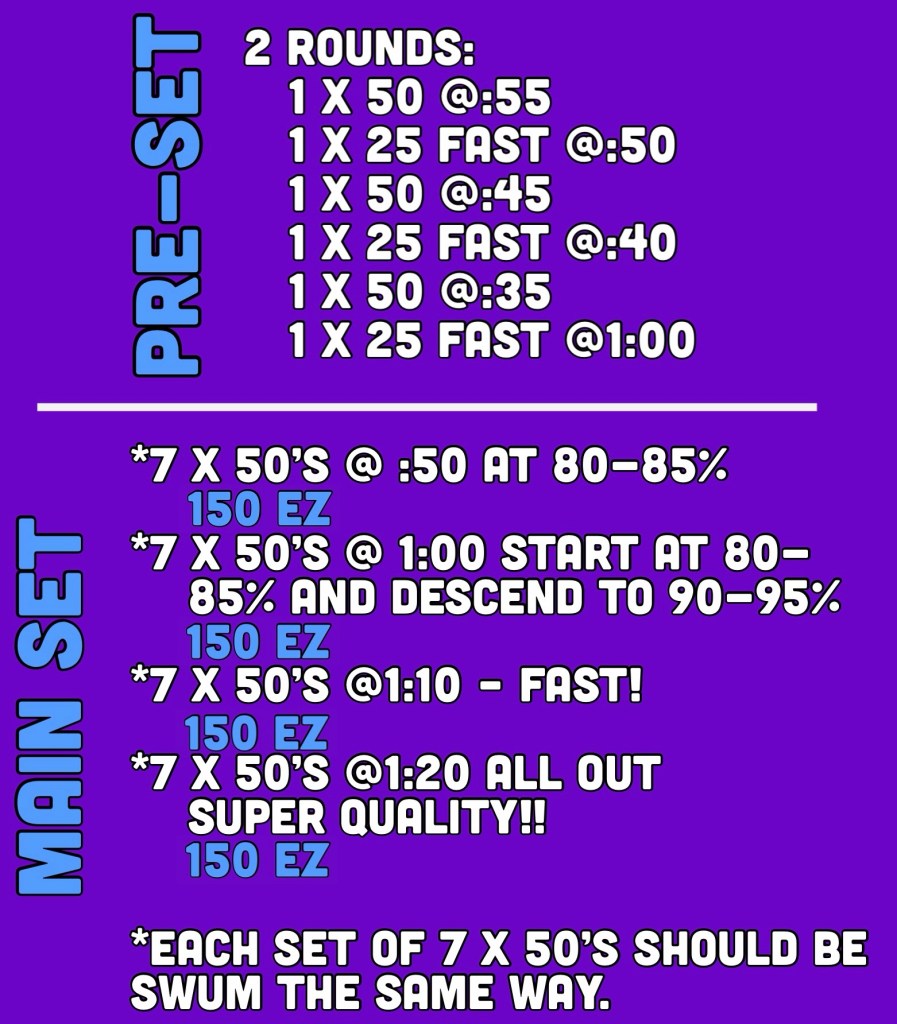
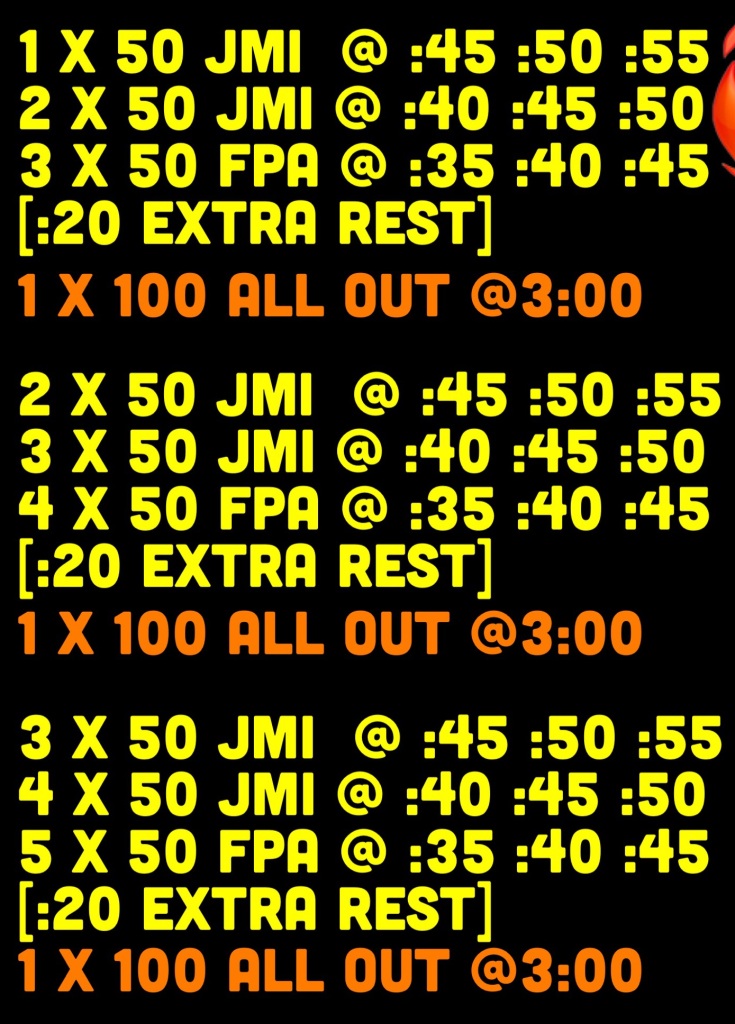
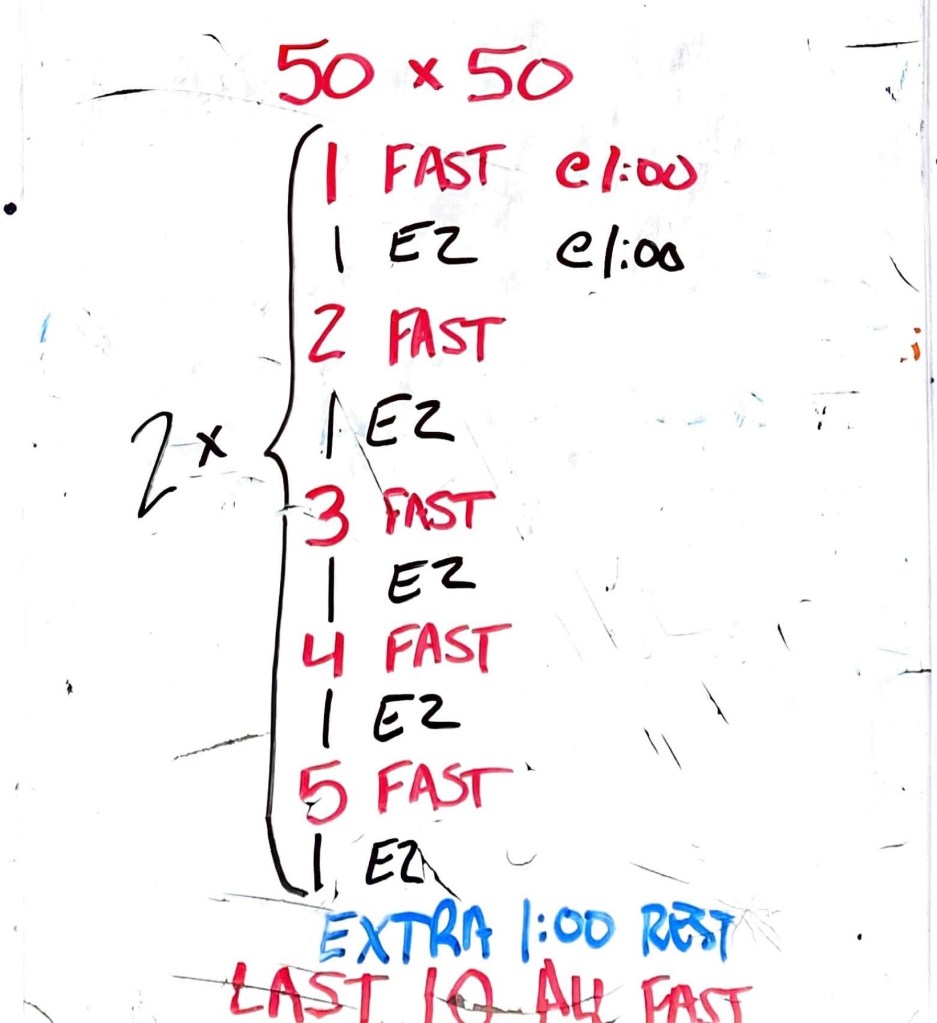
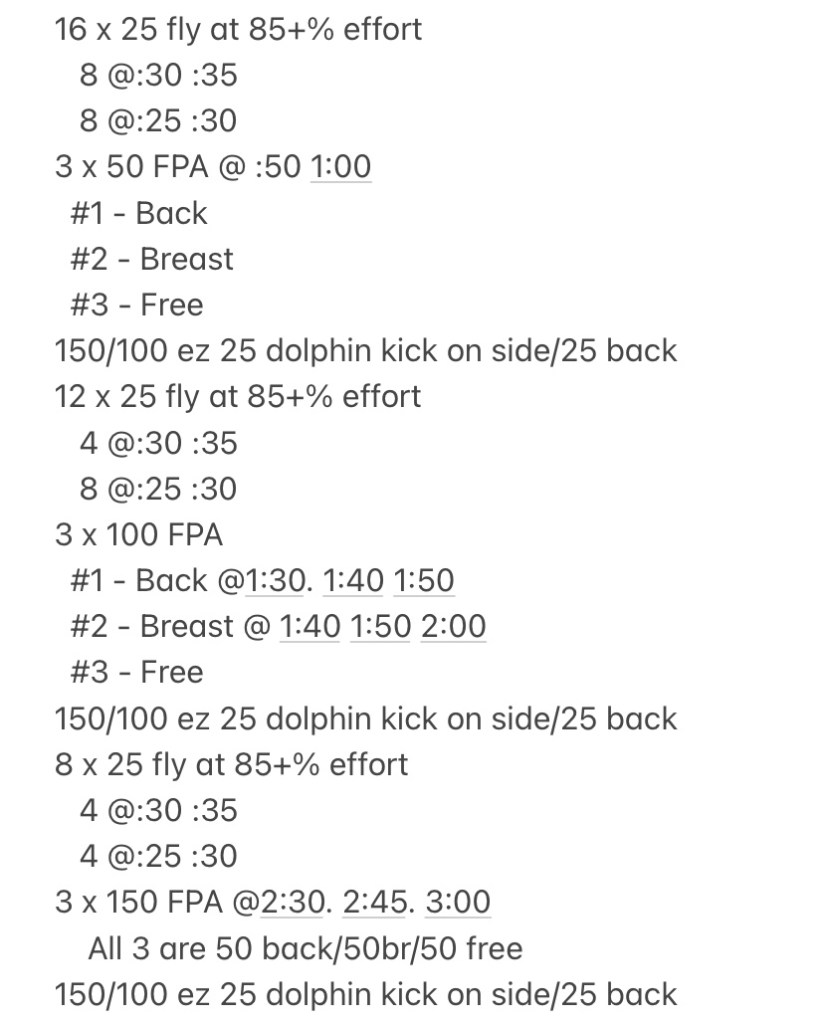
“We did this the day before heading out of town for our training trip. The set is really simple and straight forward, but my team really got after it, and we had some really fast swimming on the 3rd and 4th rounds of the 50’s. The (pre-set) is one of my favorite warm-up sets to get heart rates up before the main set. It can be modified to intervals appropriate for most any level of swimmer.”
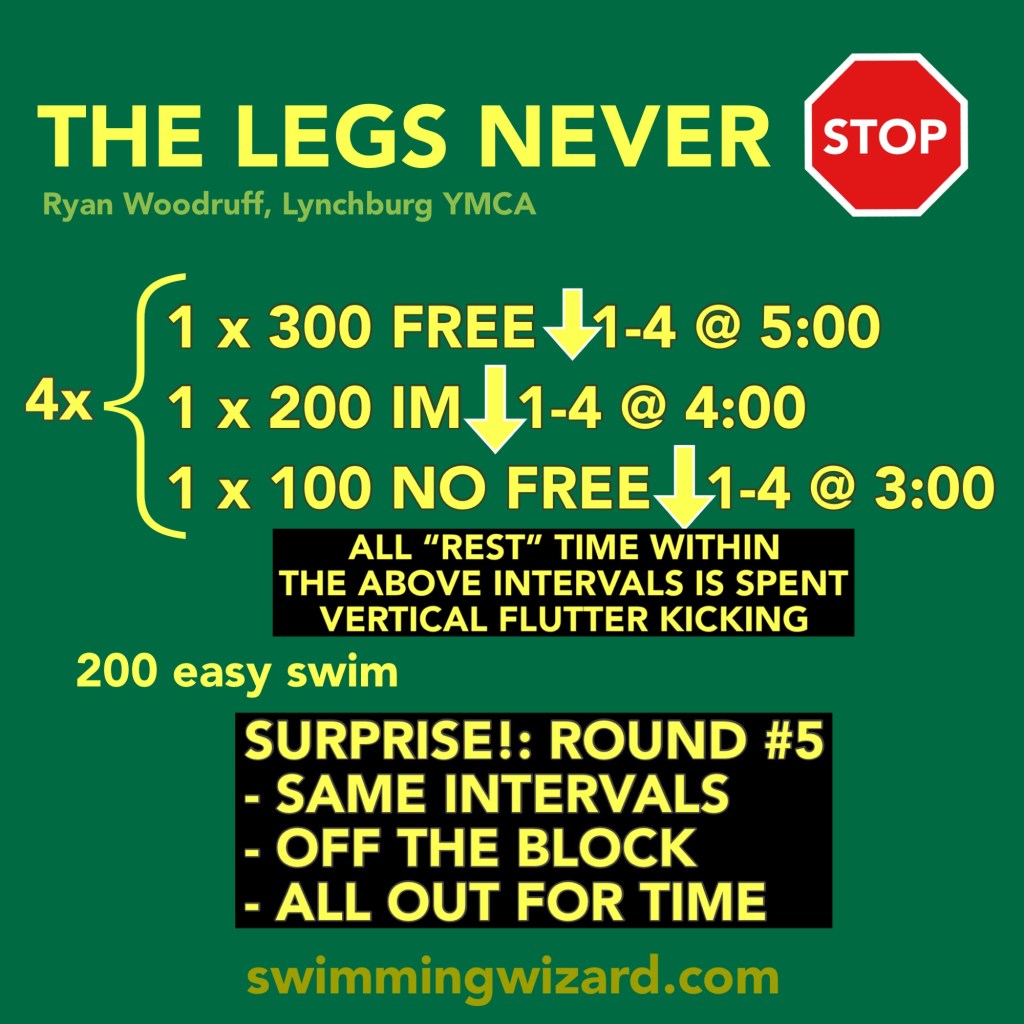
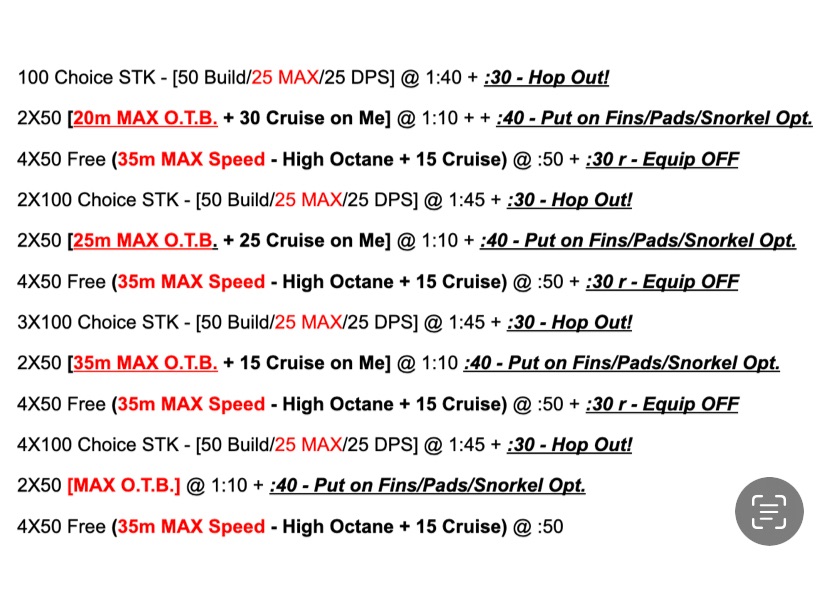
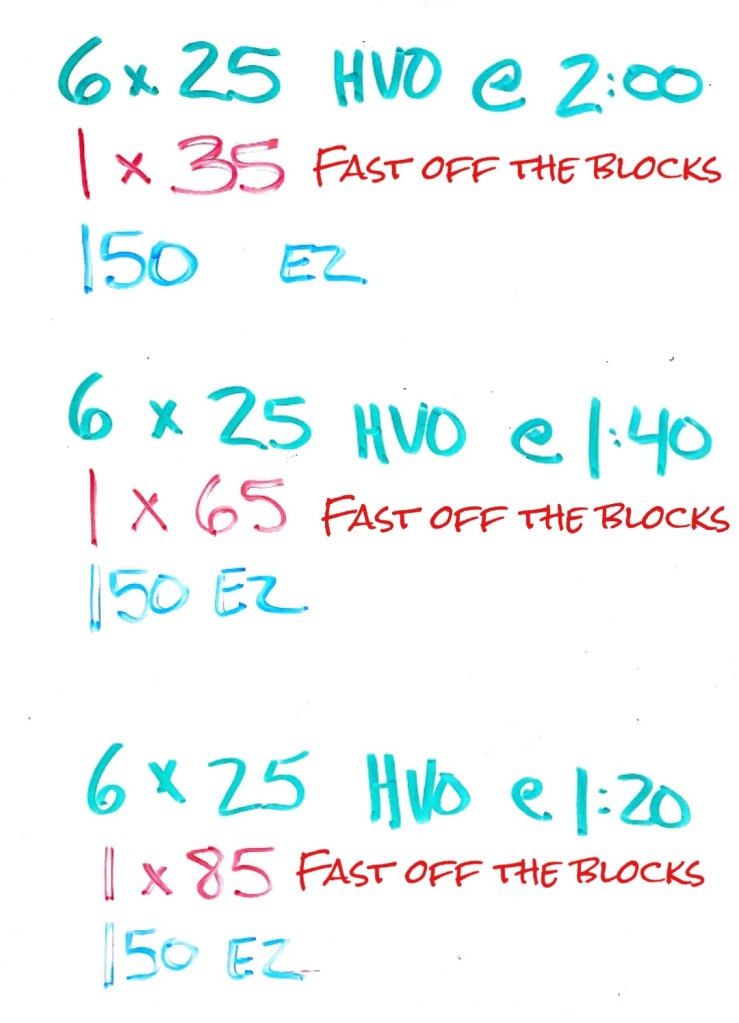
For this one, I wanted to change things up with our athletes by loading the legs early and then going off the block with different broken reps. The idea is for them to finish the kick, hop out, get about :30 or so to get set and then send them on their way for a max effort swim. Two max effort reps in a row, one kick and one swim should spike their heart rates and blood lactate levels and force them to cope with the elevated levels for the remainder of the set. Between rounds, they should be getting anywhere from 30 to 45 seconds of rest following the recovery swim.
Of course they’re not really infinite, but they might feel that way!
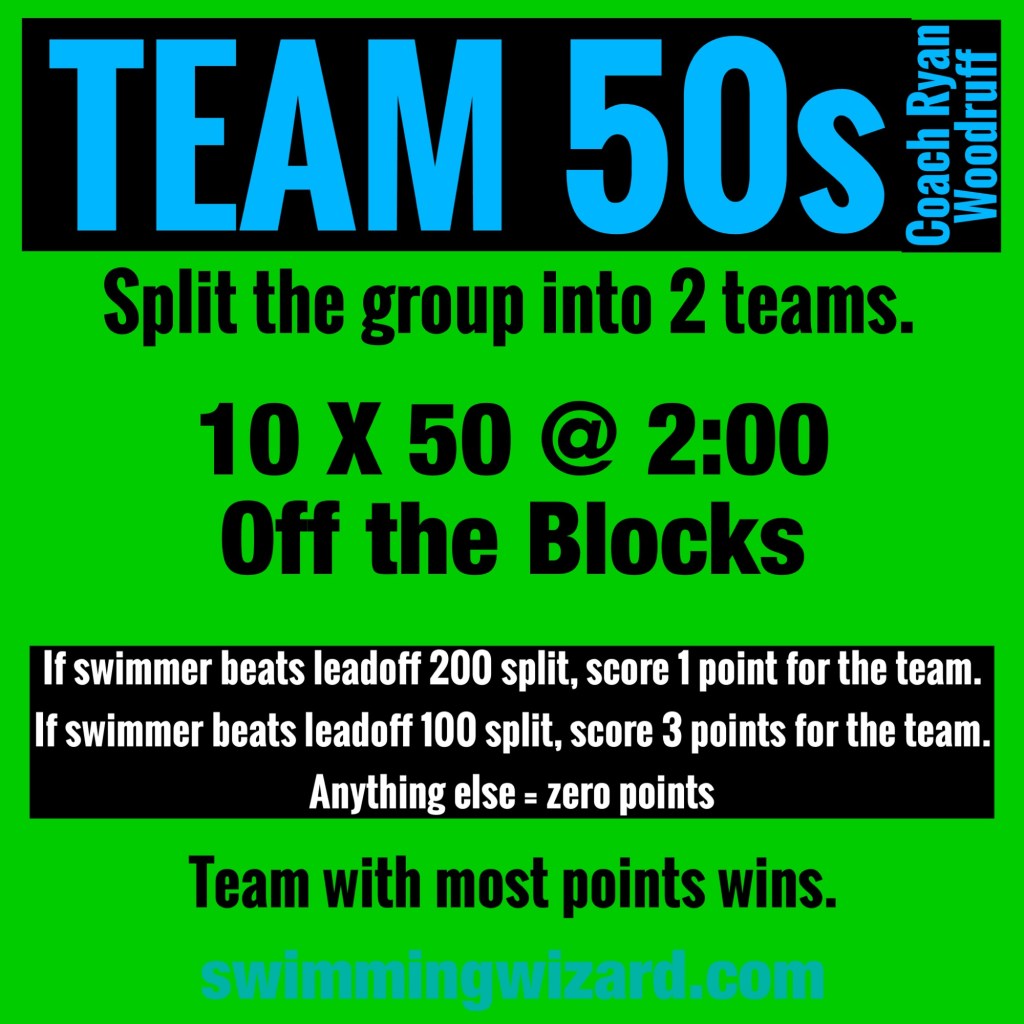
This one’s a mindbender. Start by doing 50s off the blocks. When coach is satisfied that the desired level of work has been achieved, the round may end and the 200 smooth commences. An even better way to end the round is to throw out a goal time for a particular swimmer to end the round for the group. Start with an outlandish number. If failure occurs, the group does another 50 and then a second swimmer gets a goal time, a bit more reasonable. Repeat until success. Carefully monitor how the team responds. Do they rally together or get negative and resentful? Use it as a team-building exercise. Coach determines how many rounds.
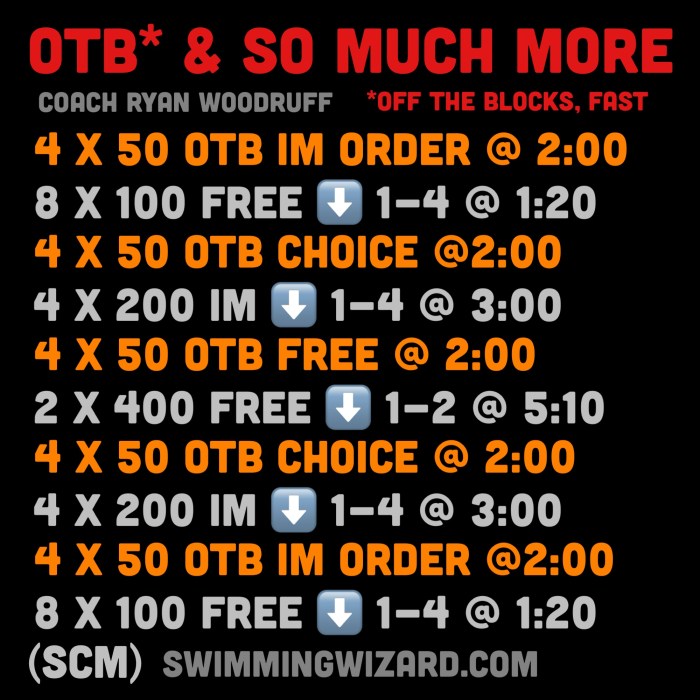
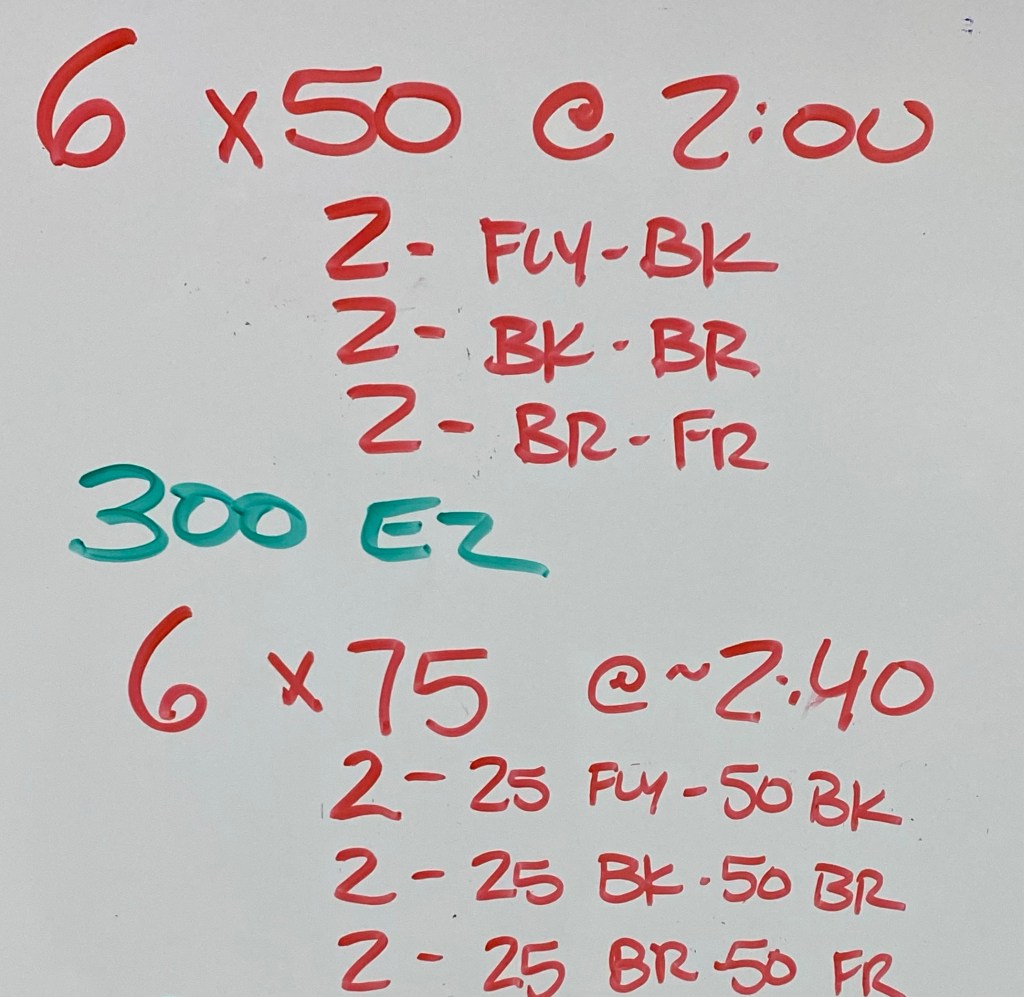
This was a solid quality set for us recently. Swimmers were instructed to pick a stroke and stick with it for all 7x 75s of a round. We did this in short course meters — if we were doing it in short course yards I probably would cut the intervals down to 1:10 or 1:15. The 1:20 gave most our swimmers between :25 and :40 rest on each 75. The challenge is to hold your time as the repeats increase and then go even faster off the blocks in the last one.
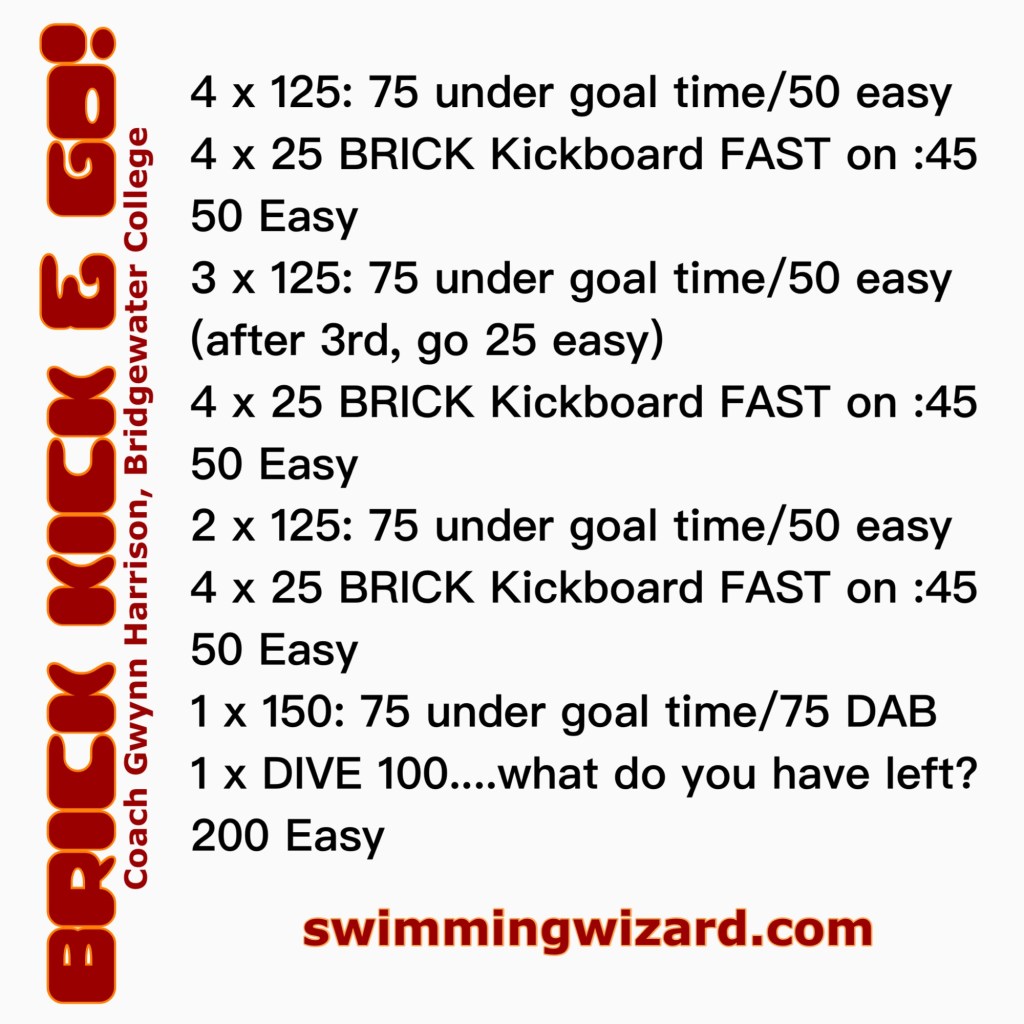
For our strokers: (brick kickboards are 15 pound weighted). The idea is to get legs tired and then be able to use them to push out some times. We train SC meters – so the 75 under goal 100 time is something we use a lot. If we can consistently get 5 seconds under, thats a great set.
Alex Muni, Assistant National Coach – NOVA of VA Aquatics
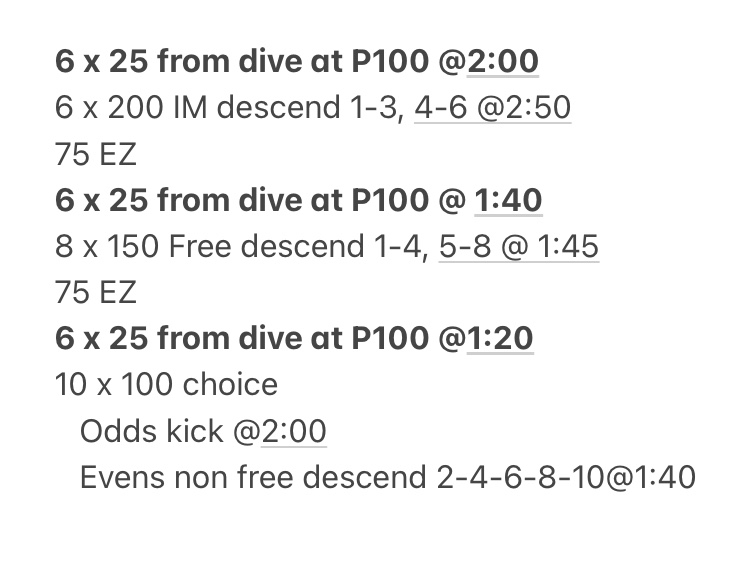
For this one, we were targeting 100 pace and 50 speed. For the 50s off the block, swimmers were instructed to treat the race portion as they would a 50 (rate, power, and breathing (if free or fly)). For the 50s with equipment, we wanted them to get full reach and grab as well as getting as high out of the water as possible with assistance. There was a lot of race pace efforts, so active recovery was built into each swim/rep.
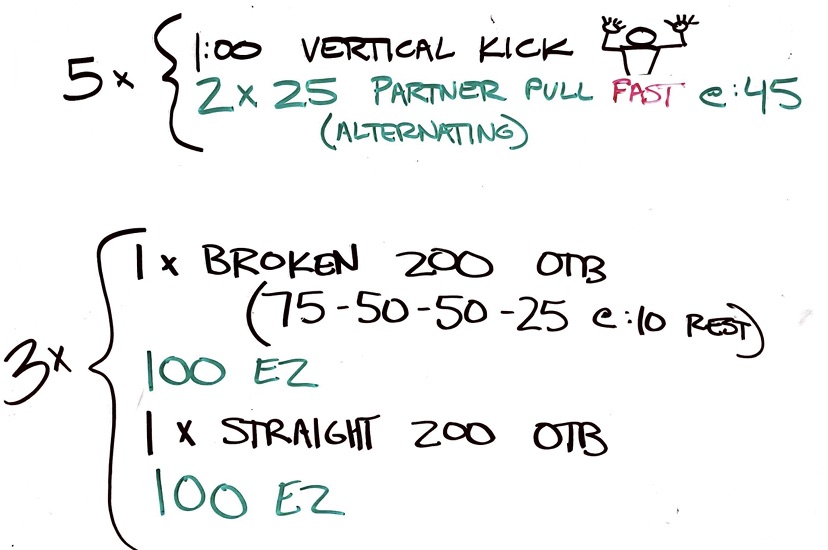
We finished out the year with a little partner work and some broken and not broken (straight) 200s off the blocks. We had some excellent results. Excited about what we can do in 2024!
You may have heard about the Golden Race that debuted at the World Cup meet in Budapest recently. The race pitted the winners of the individual 100s against each other in a time-handicapped prize race. It’s an interesting twist on racing that we modified a bit to use at practice.
We were 2 days post-meet, so we have some recent fresh meet results.
3 x 100 Golden Race @ 7:00
We put 1 swimmer up on each block for a choice 100. Coach starts counting backwards with a stopwatch… 1:20…1:19…1:18…1:17 and so on. Each swimmer dives off the block for the 100 when they hear the time that they swam at the meet this past weekend. The winner is the one who finishes the 100 first. Essentially, the 100 is handicapped to their recent race results.
Swimmers enjoyed it and swam faster than expected. They could choose their stroke for each 100, and swimmers formed themselves into heats irrespective of speed.
The stopwatch that I started with the countdown can also be used to time the swimmers. Since I started counting down at 1:20, if the stopwatch reads 1:27.2 when the swimmer touches, then he swam approximately 7.2 slower than his meet time. This information allows swimmers to be racing the clock AND each other.
Next time I might try assigning swimmers to teams and awarding points for 1st, 2nd, 3rd, etc.
2x 2×25 fast Fly A-20 B-20/25 C-25 1×50 BK A/B/C-50 3×25 1×50 4×25 1×50 3×25 1×50 2×25 1:00R Focus on the fly was holding the same distance and speed underwater and staying within a 1 cycle range on top of the water
They did a short recovery and went to the blocks for:
8x 100 FL on 1:30 with fins focusing on coordination at lower tempo Fins came off Hopped on the blocks and went a broken 50 25FR/25FL with :10R at the 25 on 1:30
I thought I’d share my favorite freestyle sprint set. We usually do the 200’s in groups to allow swimmers a bit more rest. Short course yards, 1800 yards total.
I know we aren’t very far into the year, but this one was REALLY good.
SCY
Swimmers partnered up. The 25s and 50s were fast off the blocks for time. Half of our group swam while the other half videoed them using their phones (“peer coaching”). Swimmers gave each other feedback. I was impressed with the quality of the feedback and the amount of teaching/learning that was happening. And we swam fast too!
Swimmer A would do all three of the 25s before swimmer B did the 25s. This allows for shorter time between performance, feedback, and repetition. Coach feedback was used to supplement and guide swimmer-provided feedback.