Ryan Woodruff, Lynchburg YMCA Swim Team
Free Swimming Workouts, Sets, Ideas, and Dryland Exercises from Professional Coaches Around the World
Ryan Woodruff, Lynchburg YMCA Swim Team
Ryan Woodruff, Lynchburg YMCA Swim Team
We did this IM workout recently, getting in some good aerobic work for some of our 400 IMers. The 600s were descend to 90+% effort.
SCY

Ryan Woodruff, Lynchburg YMCA Swim Team, Lynchburg, Virginia
I like to pair these two training tools. Each has their benefit and they are complementary. Buckets work power, and tempo trainers help us make sure we aren’t losing the speed when we use resistance. This practice was in SCM.
Tempo Trainers
2x through:
10 x 25 choice @ :30
Odds min count
Evens max tempo on tempo trainer
1 x 100 kick no board with max consistent UWs
Buckets (all choice)
4x through:
3 x 25 w bucket sprint to 15 m @:40
2 x 25 w bucket sprint to 20m @:40
1 x 25 w bucket sprint (for time) @:40
1 x 25 EZ no bucket
1 x 75 all out OTB
100 EZ
4 x through:
1 x 25 fast with bucket @1:00
1 x 50 all out OTB no bucket
1 x 75 EZ (kick on back holding bucket the first 25)
Edie Rogers
Charlottetown Bluephins
Charlottetown, Prince Edward Island, Canada
Here’s a fun set that’s a rite of passage for us. Mainly done on a Saturday morning.
This is swum as 400 (SCM) fly – all two arms every stroke. At the deep end get out and do a squat, shallow end out and do push-up. Starts with one squat then 2 push-ups, 3 squats and so on. The other rule is that you must get out on your foot – no getting out on a knee. If I see you do this you have to jump back in and get out again.
Enjoy!!
Alex Muni, NOVA of Virginia
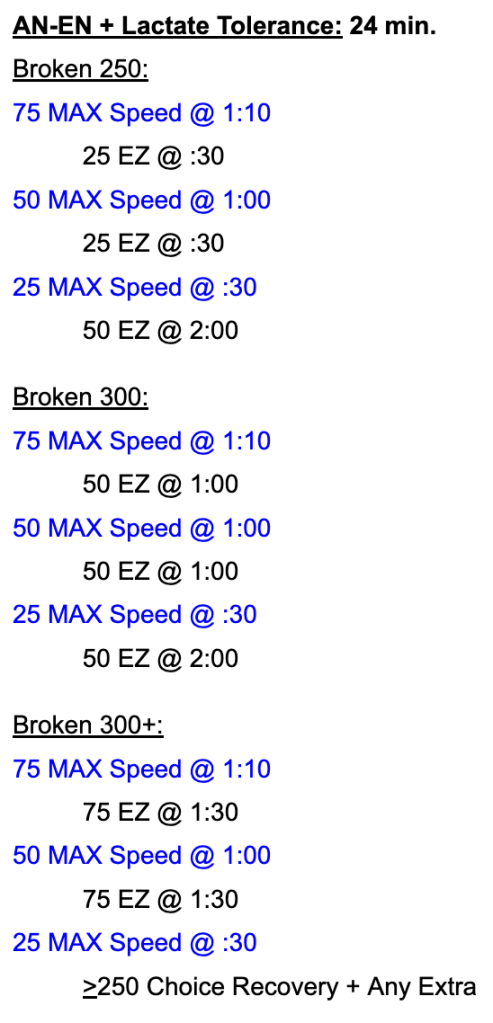
Our typical Tuesdays with our National group involve some anaerobic stacking. So our last 30 minutes are lactate tolerance. To “activate” the right system and get the most adaptation, I had to keep their rest under :30 following the max effort swims. As the set evolved, they got more active recovery swimming to help them maintain their speed on the max effort swims as well as maintain a higher but steady heart rate during the recovery swims. The subsequent max effort swims with the increasing acidosis combined with the high neuromuscular demand while metabolic stress is building is where this set becomes “lactate tolerance”.
Emily Laurent, Swim MAC Carolina Dolphin 2 Coach, Charlotte, North Carolina
1X200 @ 4:00 Free with Snorkel
4X50 @ 1:30 25 Br kick on back, 25 breast races
1X150 @ 3:00 Free with BP every 3
4X50 @ 1:30 25 Breast Race, 25 Br kick on back
1X100 @ 2:00 Free with BP 5
4X50 @ 1:15 Bk/Br by 25 IMT
1X50 @ 1:00 Free RACE! (Min breathing)
4X50 @ 1:15 Br/Fr by 25 IMT
Ryan Woodruff, Lynchburg YMCA Swim Team, Lynchburg, Virginia
In most competitive swimming situations, there is a defined endpoint to our effort. The race is a certain distance, the set is a certain number of repeats, etc. Introducing a bit of uncertainty is an interesting experiment in motivational psychology.
I write this on the board:
Swimmers pick a stroke and stick with it for the full set. Every 50 is timed. The swimmers don’t know how many we will do. I watch the group and keep an eye on their effort, their results, and the overall energy in the squad. When those start to flag, I throw a wrinkle into the instructions, such as:
There are all kinds of ideas you can introduce here – get creative! Just make sure they are evoking the right response – more effort, more togetherness, more motivation!
Ryan Woodruff, Lynchburg YMCA Swim Team, Lynchburg, Virginia
SCM
We placed pucks at the 7m mark off each wall. Swimmers were instructed to UW dolphin kick the first AND last 7m of every 25. In between the pucks (~11m) was swim freestyle. At each wall, do an open turn and get a breath.
2x through:
4 x 25 @ :05 rest
3 x 50 @ :10 rest
2 x 75 @ :15 rest
1 x 100 (pause and regroup)
On the second round, we used fins and flipped all turns.
Dr Lukas Mundelsee, Germany
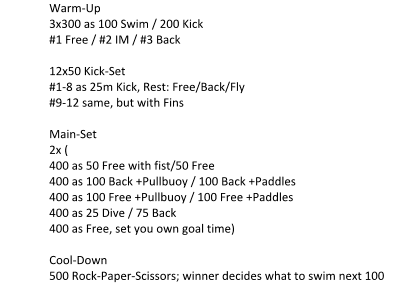
SCM
Coach Sebastian Sieburger
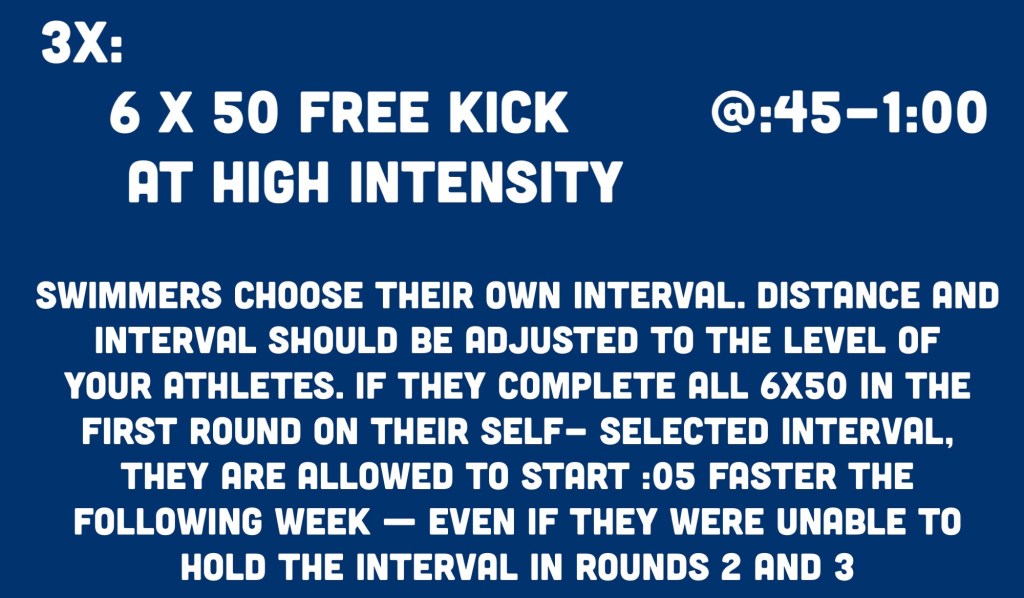
LCM
Ryan Woodruff, Lynchburg YMCA Swim Team
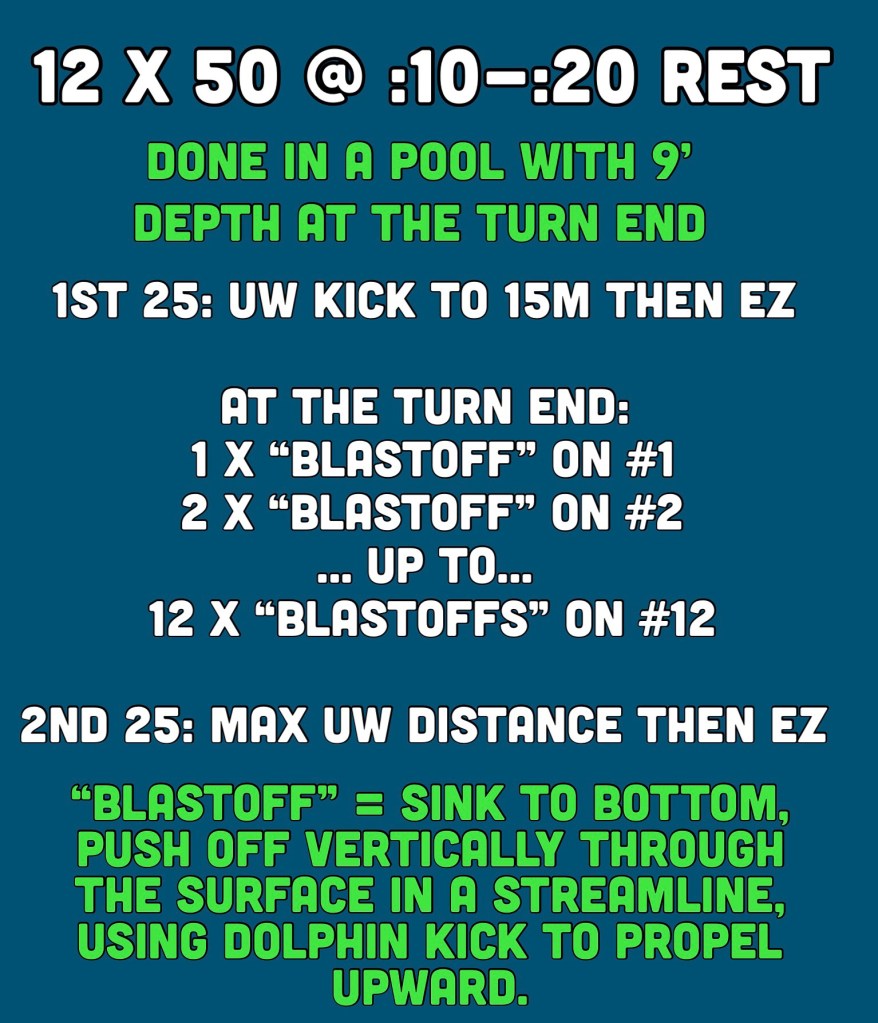
We did this set in a pool with a 9-foot depth at the turn end. The interval was set up as :10 to :20 rest so that swimmers could take the rest they needed to make their underwaters fantastic and go at their own pace.
Elise Knoche, Head Coach, University of Wisconsin-Whitewater
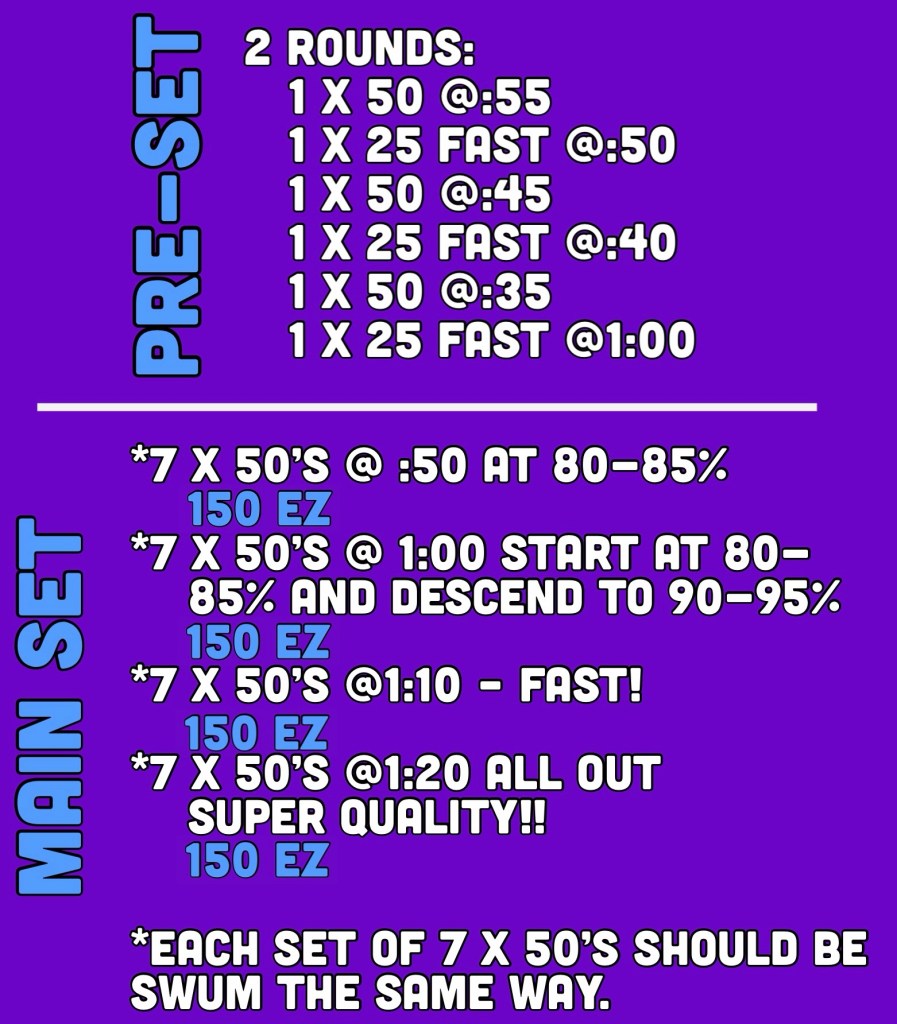
“We did this the day before heading out of town for our training trip. The set is really simple and straight forward, but my team really got after it, and we had some really fast swimming on the 3rd and 4th rounds of the 50’s. The (pre-set) is one of my favorite warm-up sets to get heart rates up before the main set. It can be modified to intervals appropriate for most any level of swimmer.”
Coach Ryan Woodruff, Lynchburg YMCA Swim Team
SCM
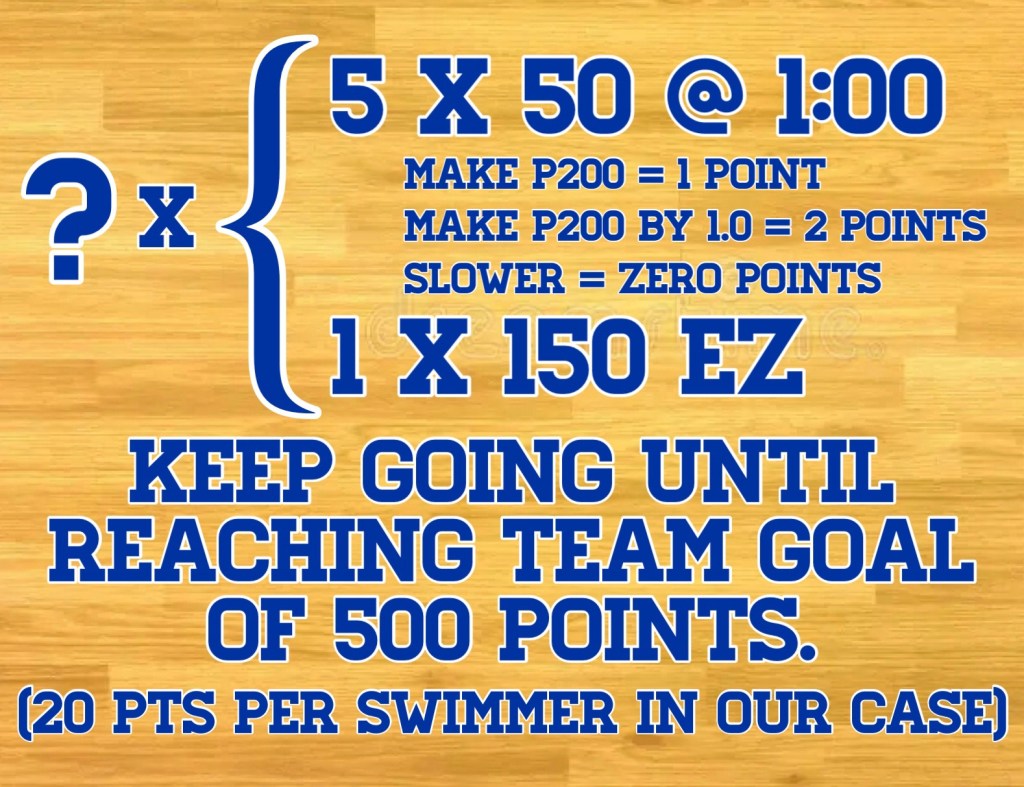
Each of our swimmers has a card with their best time race paces. This set harnessed the team concept and got some good energy flowing. Here’s how it worked:
Each swimmer kept track of how many points they scored in the round, scoring 1 point if they swam faster than 200 pace (P200), 2 points if they swam a full second faster than 200 pace, and zero points if they swam slower than P200. We appointed a captain in each lane, and at the end of each round the captains totaled the points for their respective lanes. We set the team goal at 500 points, which was 20 points on average for each of the 25 swimmers we had a practice. Swimmers were allowed to individually choose their stroke by round, but if they scored more than 5 points in a round, they had to choose a different stroke on the following round. We ended up needing 5 rounds to reach the 500 point goal.
Ryan Woodruff, Lynchburg YMCA swim team
SCM
Ryan Woodruff, Lynchburg YMCA Swim Team
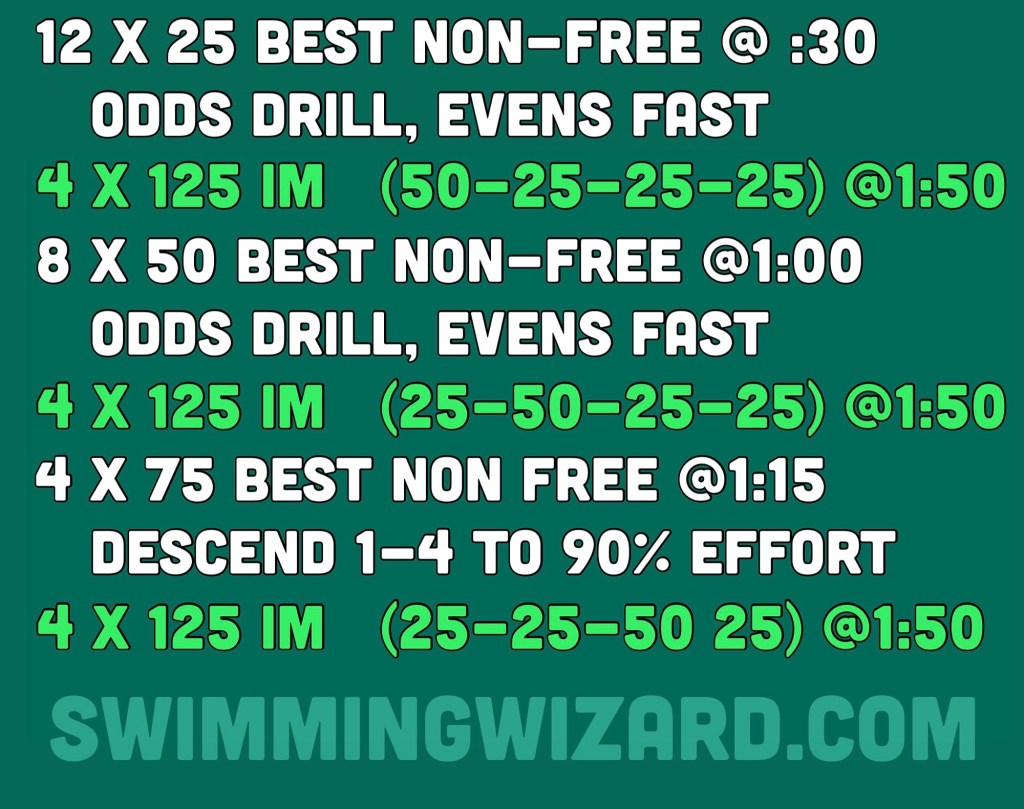
We did this set in a 25m pool. After the prescribed underwater distance, swim smooth free, fly, or back for the remainder of the lap. This interval gave most of our squad :05-:10 rest per 25.
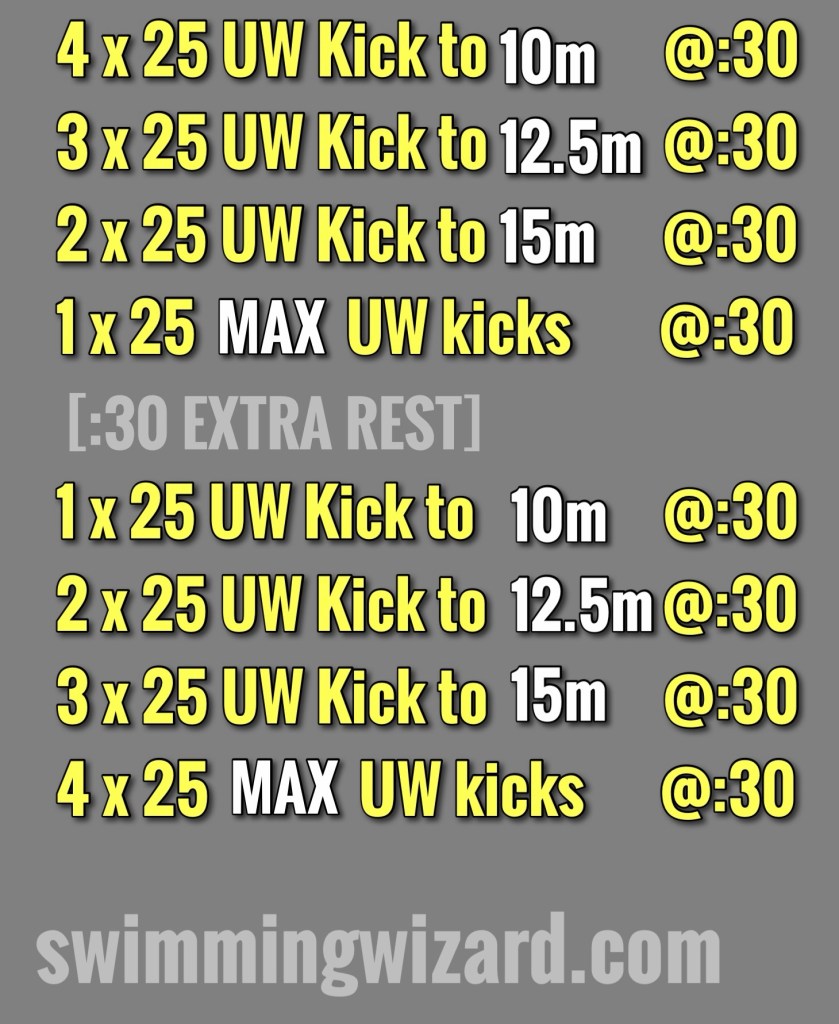
Coach Emily Laurent, SwimMAC Carolina
This is a set that I modified from a couple of the sets on the website, but my swimmers seemed to really like it. Main focus was the 100s doing the correct underwater under stress. This was for a combo practice of a set of 11-14 that are BB-Age Group Cut for their respective ages.
4X50 @ 1:15 IMO Fast
8X100 @ 3:00 Back, 25- 5 squats, 25- 5 pressouts, repeat
4X50 @ 1:15 Choice Fast, perfect swims
6X100 @ 3:00 Breast 10 squats, 5 pressouts
4X50 @ 1:15 IMO Fast
4X100 @ 3:00 Fly 15 squats, 10 pressouts
4X50 @ 1:15 Choice Fast
2X100 @ 3:00 Free 15 squats, 10 pressouts
4X50 @ 1:15 IMO Fast
Ryan Woodruff, Lynchburg YMCA Swim Team at the YMCA of Central Virginia
We did this one recently at a morning practice. Most swimmers said they liked and that it was pretty challenging.
SCY.
? x 50 Fly strong @ :40
1 x 100 Back Fast for time
1 x 50 EZ
? x 50 Back strong @:40
1 x 150 Breast Fast for time
1 x 50 EZ
? x 50 Breast strong @:45
1 x 200 Free Fast for time
1 x 50 EZ
? x 100 IM Fastest Possible Average @ 2:00
(Last one from a dive)
We ended up doing between eight and twelve 50s in each of the three sets. The top part of our group went on the intervals listed — the rest went on an interval :05 slower. My intent with the 50s was to let fatigue build gradually through repetition at speeds that would give them ~ :05 rest. Once I sensed we were starting to wobble a bit, I gave the “final 50” warning. We did a last 50 and then launched into the timed swim of the next stroke.
For the last set of 100 IMs, we did a little “stopwatch roulette ” (start a watch, then stop randomly — use the number in the hundredths pace) to determine how many we did. We got 4 – so we did three from a push and one off the blocks.
John Neff, Head Coach GPHS Girls Swim & Dive
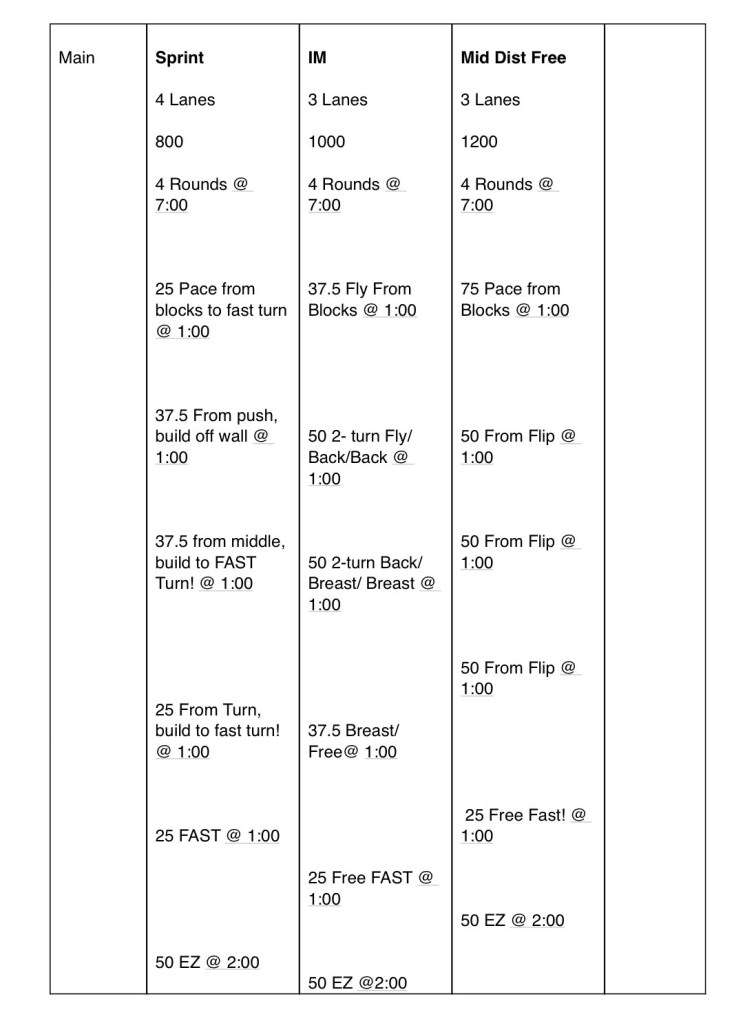
Ran this yesterday – It’s a High school team taper set run in a 10-lane SCY pool. It went very well and we saw some awesome swims.
Favorite part of the set is that everyone gets to train together. The athletes are told that lower the yardage, the higher the intensity. Every individual swim is on 1:00, with the entire group racing at the end of each round for a fast 25 for time.
Swimmers can move between groups in between rounds and are encouraged to follow their meet order.
Sprint group should be 100 Pace, IM is 200 Pace, Mid-Distance is 200 Pace.
Coach Ryan Woodruff.
SCY.
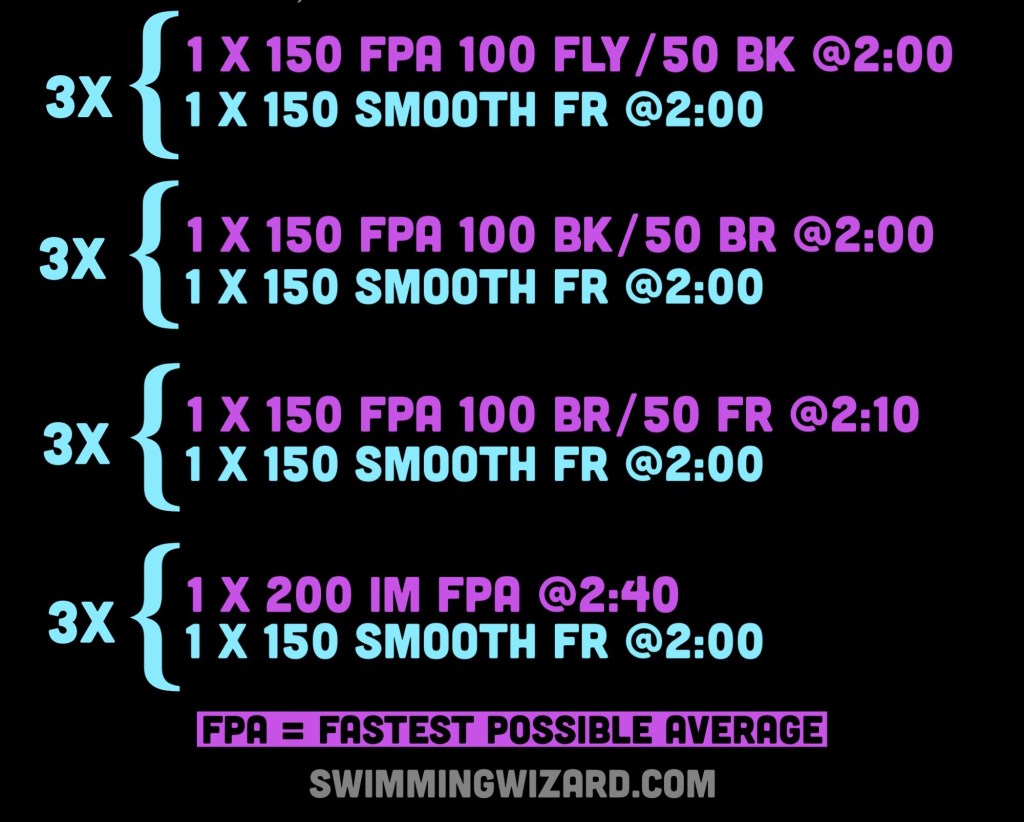
The name for this set was suggested by a swimmer after we completed it at a recent morning practice. Despite the name, our squad enjoyed the set and did a great job pushing themselves and each other.
Ryan Woodruff.
SCY
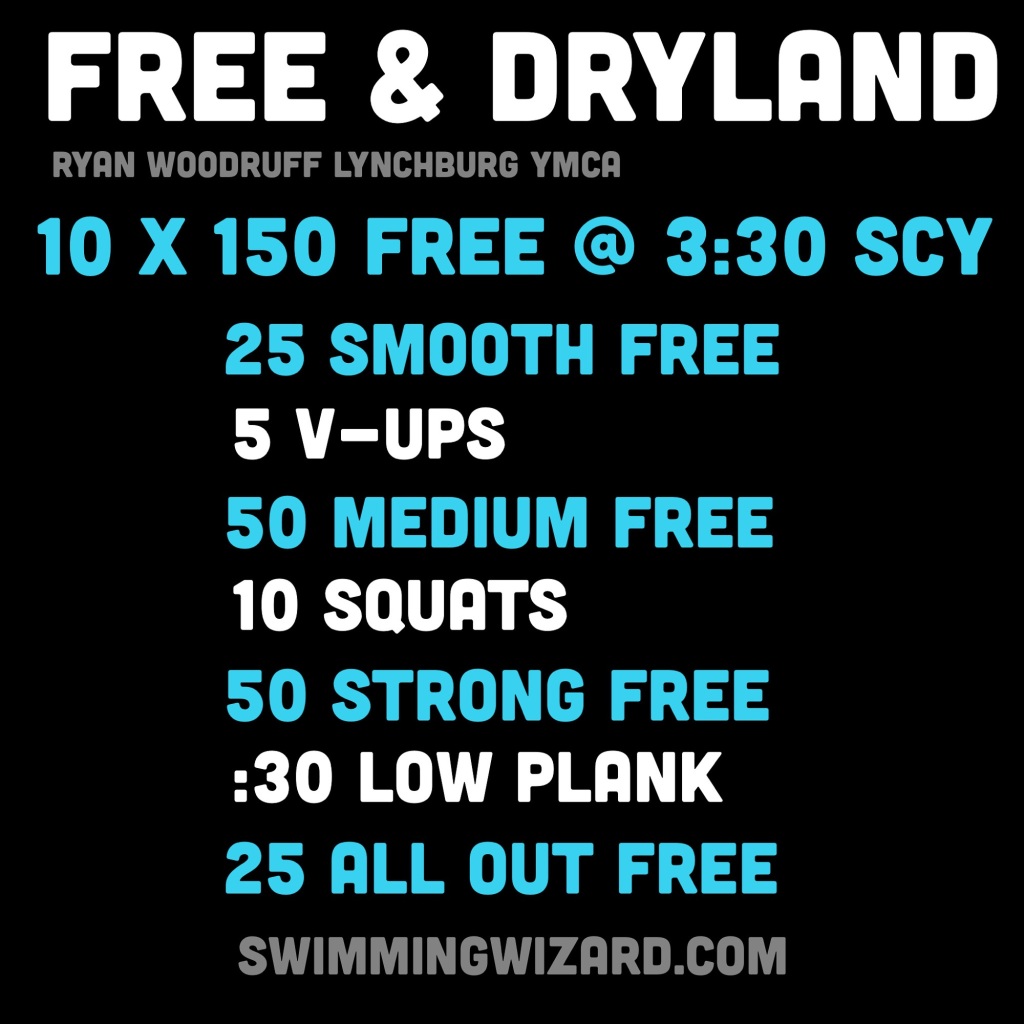
We had a very full practice for this one. Mixing in dryland allowed us to get some good work in and keep everyone moving at a high intensity.
Coach Ben Seamer, Australia
I designed this set for younger age group swimmers and it predicts their 2IM potential when done correctly – I’ll explain after the set.
[10×50(1:00) as]
1×50 Dive Fly Best Effort
2×50 Back 1:Cruise 1:Best Effort
3×50 Breast 2:Cruise 1:Best Effort
:30 Rest
4×50 Free @ Best Possible Average
Add the best effort of the three form stroke components to the best average of the freestyle and that should produce a total that is usually + or – 3 to the next 200 IM time your swimmer can drop.
Coach Ethan Coleman, Bridgewater College
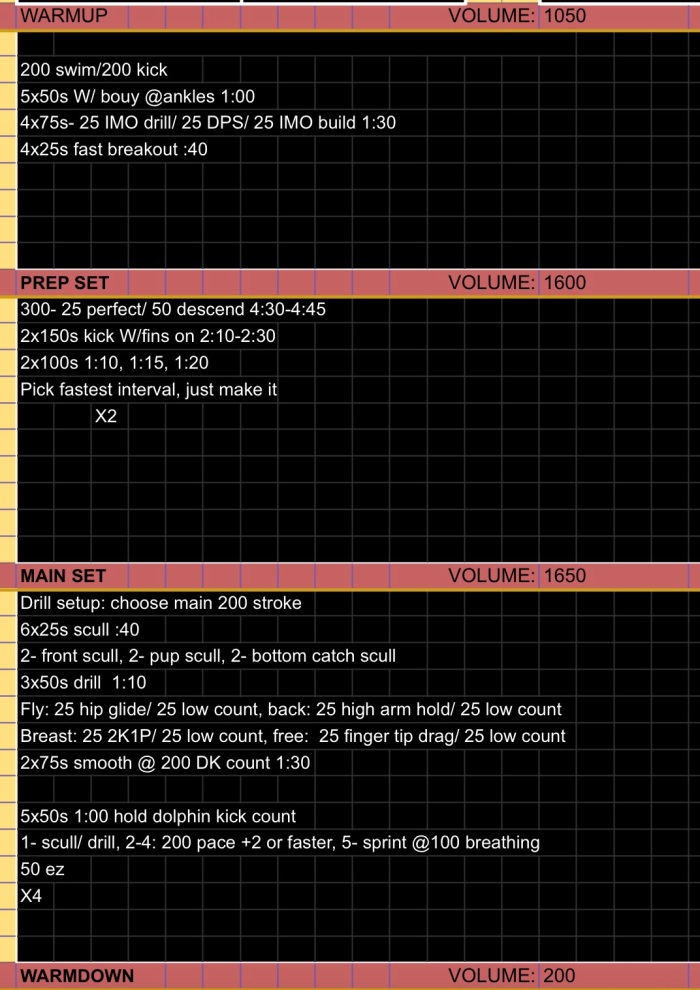
This is a set we did recently (Sept 17). Since we’re early season we are focusing 200 for everyone in the group today. The set was supposed to be +2 on 200 pace but everyone exceeded expectations. It went so well I had to share it. It’s about 4500 short course meters.

Alex Muni, NOVA of Virginia
A key part of this practice was education—helping swimmers understand the difference between aerobic capacity and aerobic power (VO₂ max).
This combination gave the group exposure to both capacity and power early in the season, reinforcing how each system feels and how to manage effort and rest accordingly.
Aerobic Capacity & Power Hybrid:
6X100 Swim P.T. [O: Free E: IM] @ Guys: 1:24/Gals: 1:26 – SKILLS
4X75 #1: Choice #2-4: Free [#1: Build HR^ #2-4: Hold Best Maintable Average] @ 1:15
6X100 Swim P.T. [O: Free E: IM] @ Guys: 1:22/Gals: 1:24 – SKILLS
4X75 #1: Choice #2-4: Free [#1: Build HR^ #2-4: Hold a FASTER Average] @ 1:15
6X100 Swim P.T. [O: Free E: IM] @ Guys: 1:20/Gals: 1:22 – SKILLS
6X50 DESC 1-3 to RED Hold 4-6 – #1+2: Choice / #3-6: One Stroke @ :55
6X100 Swim P.T. [O: Free E: IM] @ Guys: 1:18/Gals: 1:20 – SKILLS
6X50 DESC 1-2 to RED Hold 3-6 – #1: Choice / #2-6: One Stroke @ :55
Ryan Woodruff
SCY
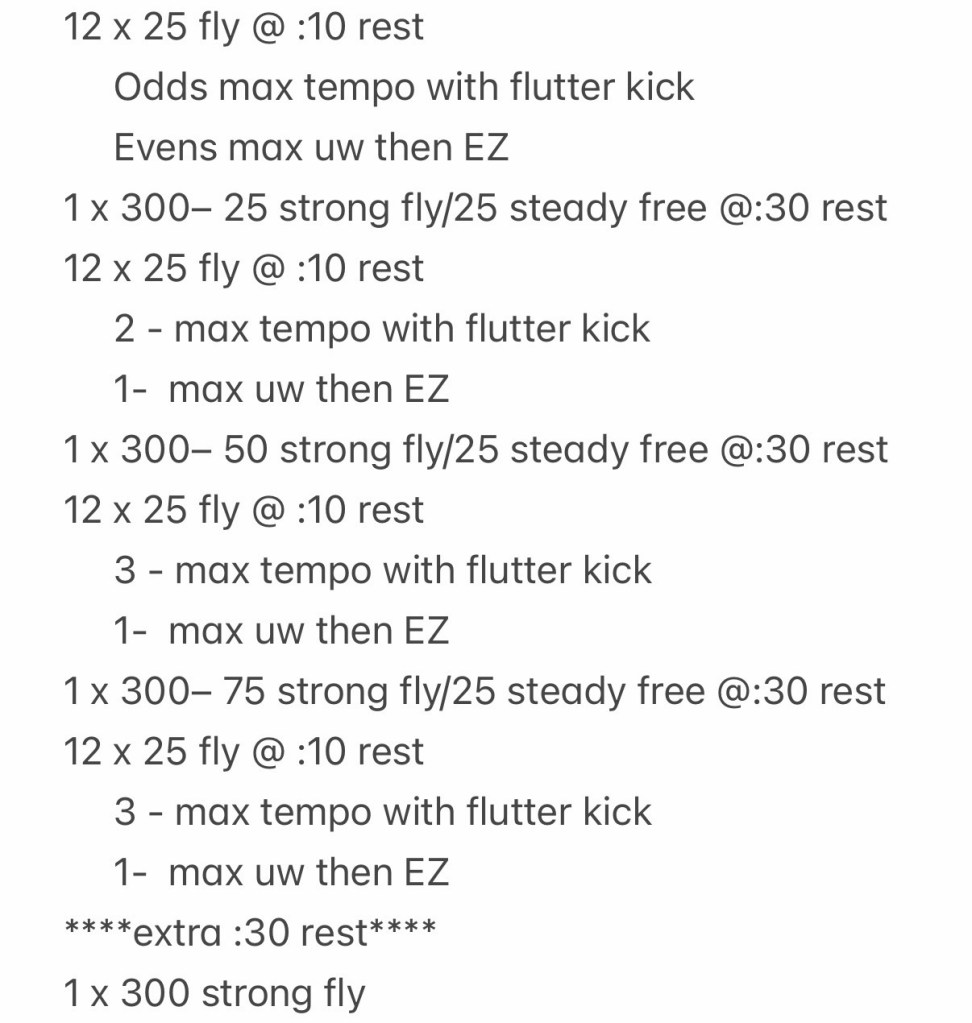
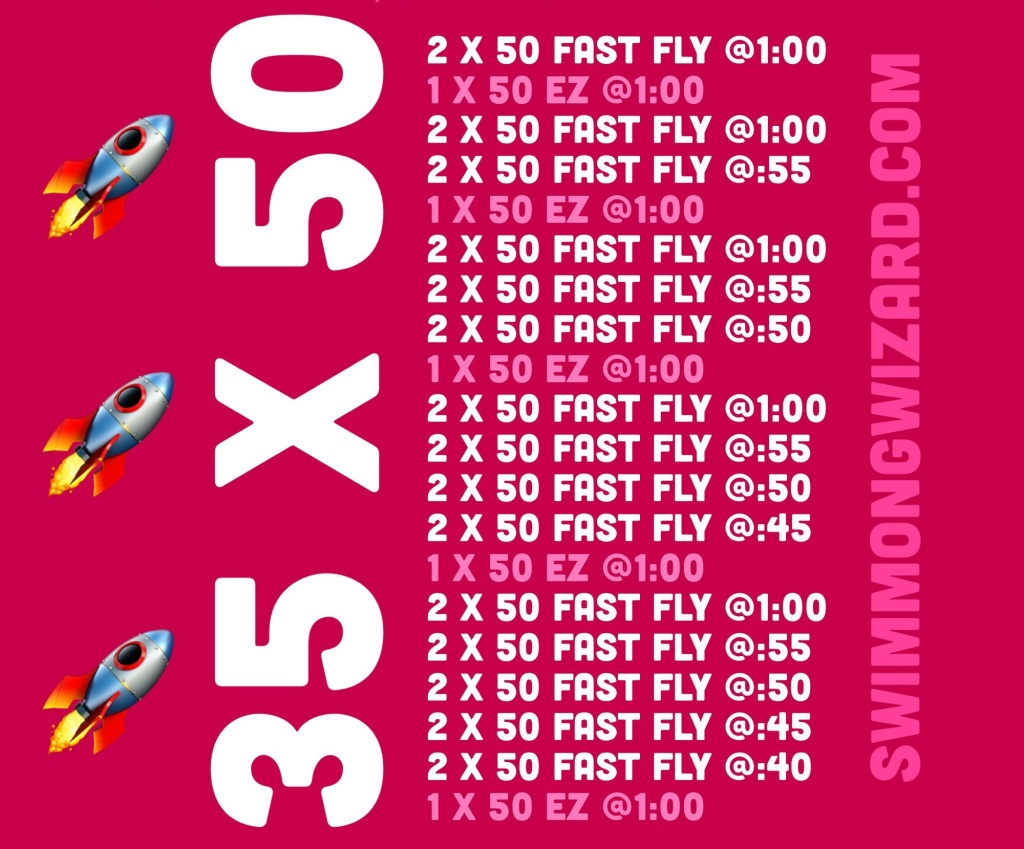
Wrote this one for a 200 fly specialist
Ryan Woodruff
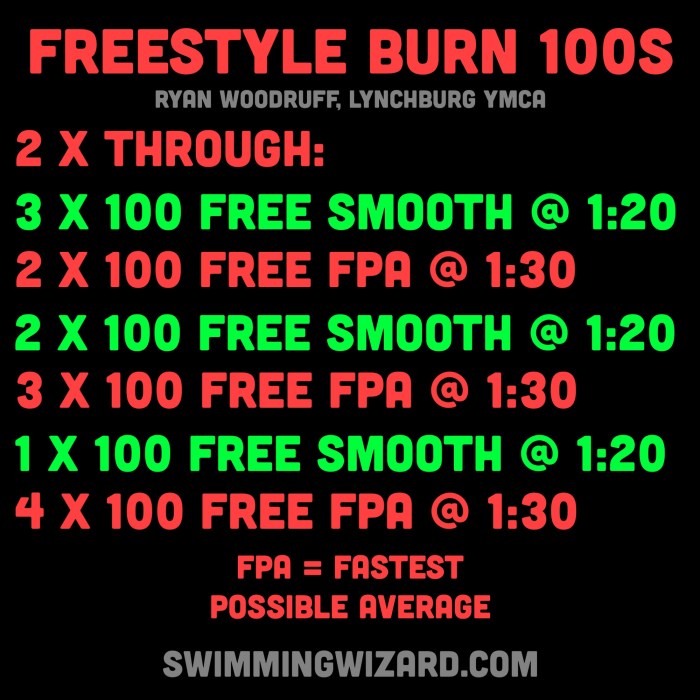
SCY. Most of our group was getting at least 8-10 seconds of rest on the smooth 100s and hovering on either side of 1:00 for the FPA 100s. Solid early season work for us.

Ryan Woodruff
The three columns of intervals (SCY)here represent an A/B/C option for different levels of swimmers. Ideally, the fastest interval should push the swimmers a bit on the first 3 rounds and be a significant challenge at the end of the set. This was a good finisher for a recent practice of ours. The last set of 6 got spicy for sure.

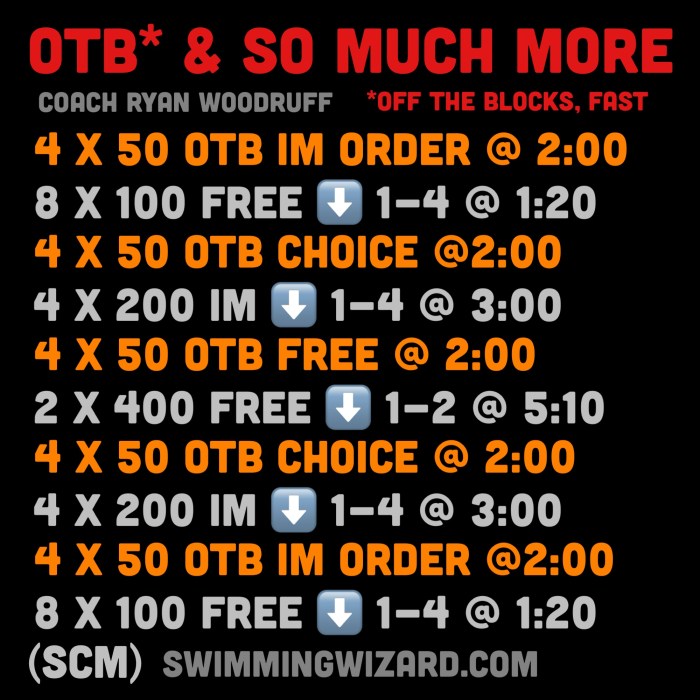
Ryan Woodruff
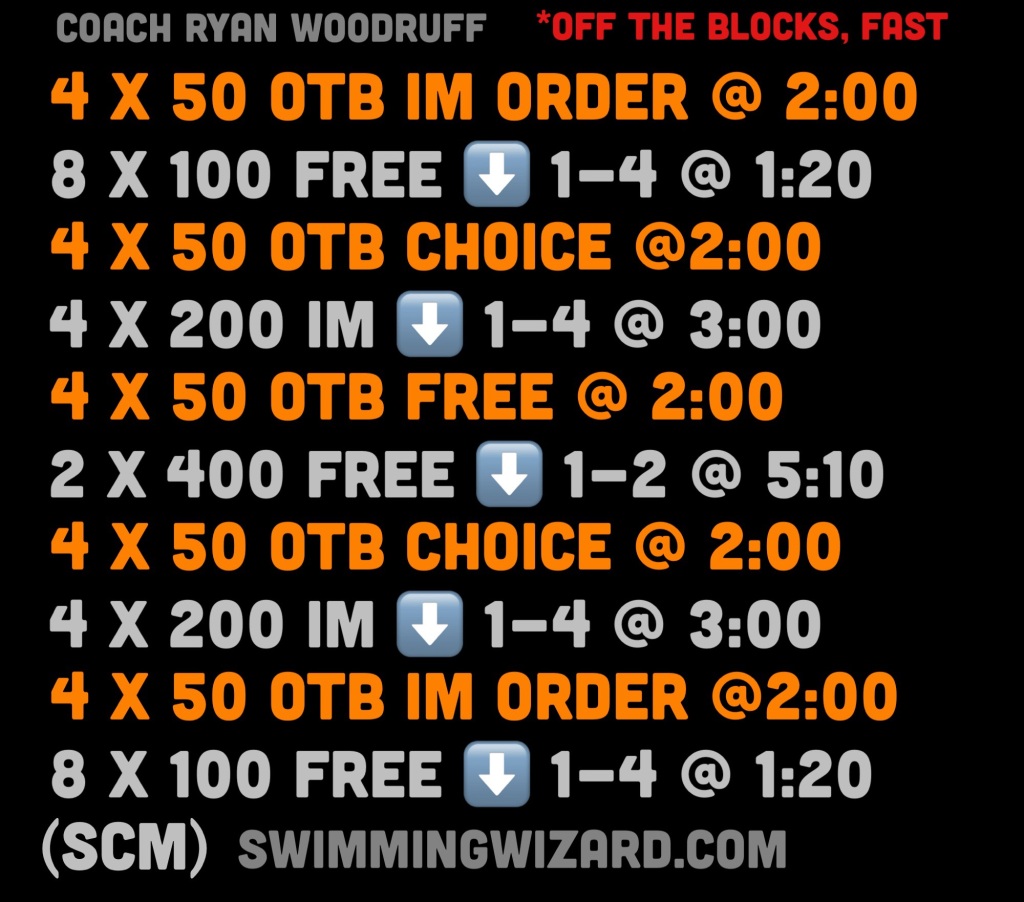
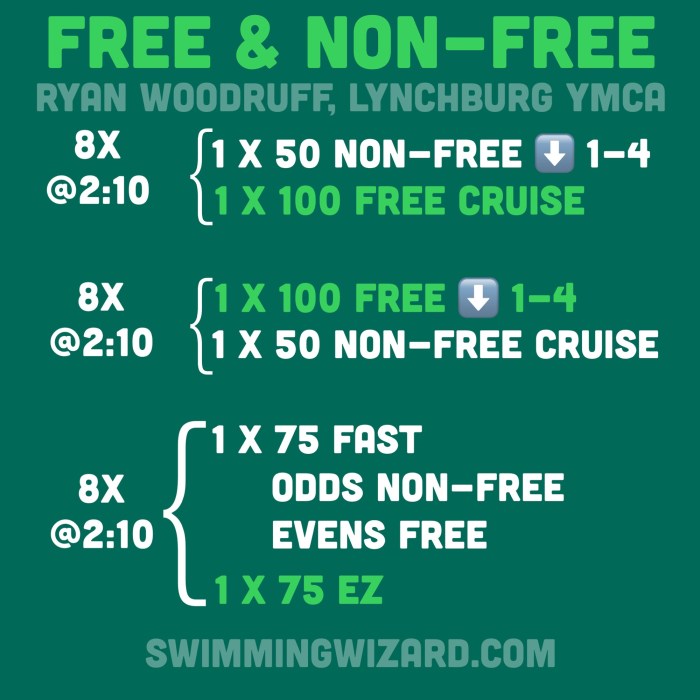
Ryan Woodruff, Lynchburg YMCA
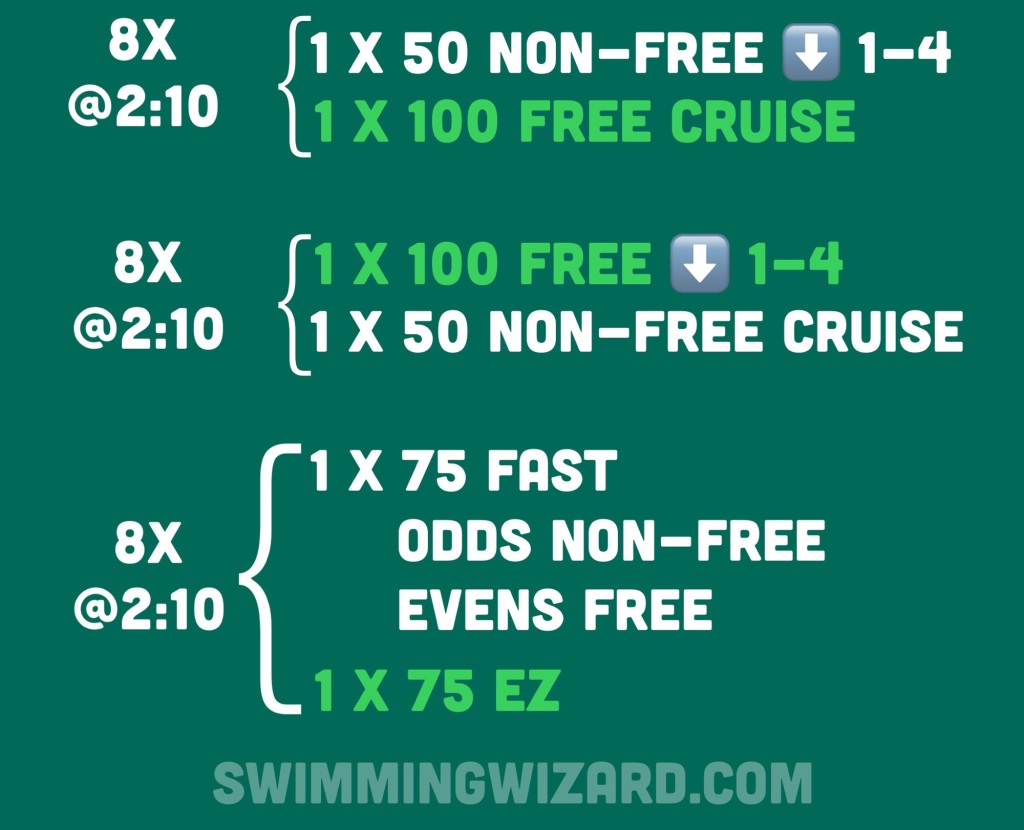
Ryan Woodruff, Lynchburg YMCA
SCY
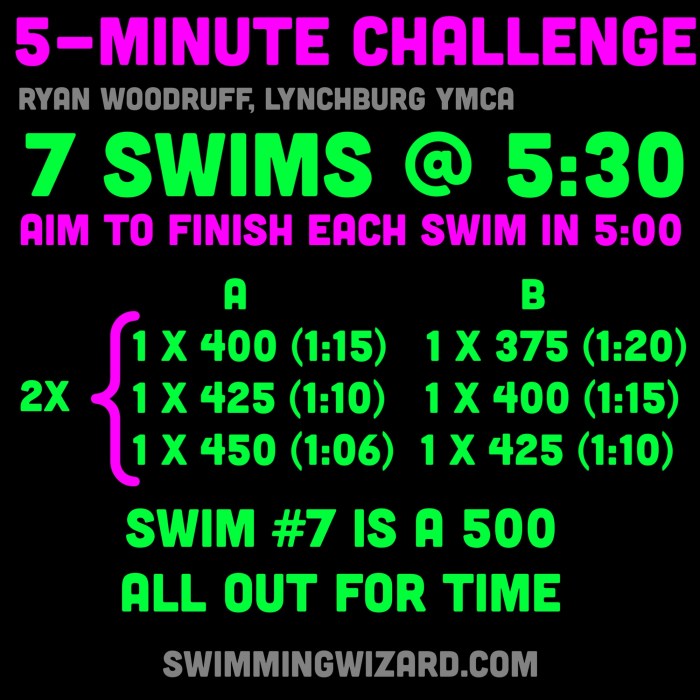
7 total swims. Aim to finish each the first 6 swims under 5:00 so that you get :30 rest. Last swim is a 500 for time!!!
For faster or slower swimmers, you can increase or decrease the distances. I chose these distances to be appropriate for our group today.
Ryan Woodruff, Lynchburg YMCA
 The Swimming Wizard